
Ghana’s tech industry is rapidly evolving, driven by a young and dynamic workforce. As the country aspires to become Africa’s tech hub, it is crucial to understand its growth, trends, challenges, and future potential.
About the Survey
The Ghana Tech Ecosystem Survey 2024, conducted by Code and Cocktails, is the first of its kind. It provides insights into demographics, industry trends, technical expertise, employment patterns, and challenges within the Ghanaian tech space. The survey had over 190 respondents, offering a fairly accurate snapshot of the industry.
Key Findings
1. Demographics
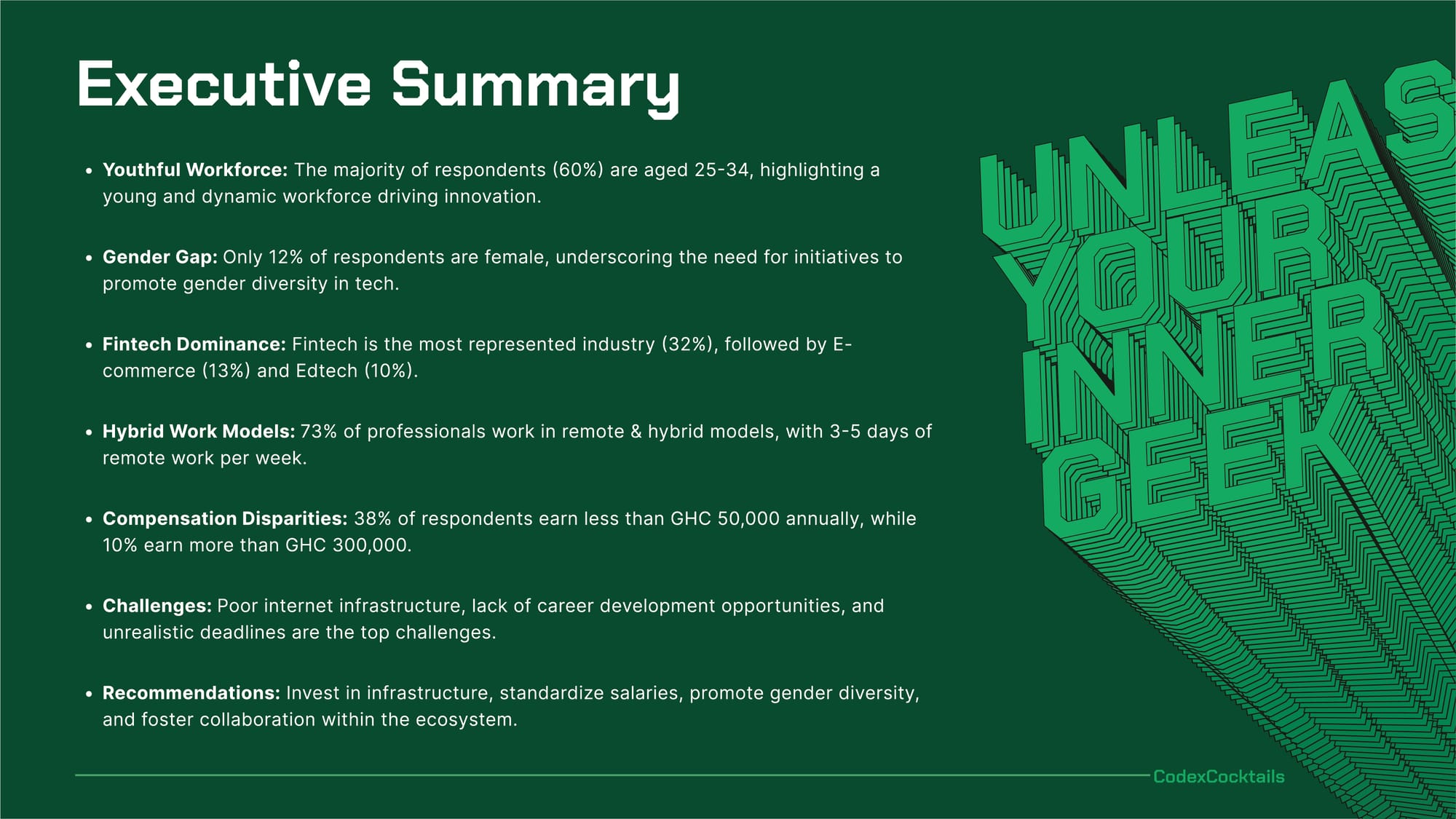
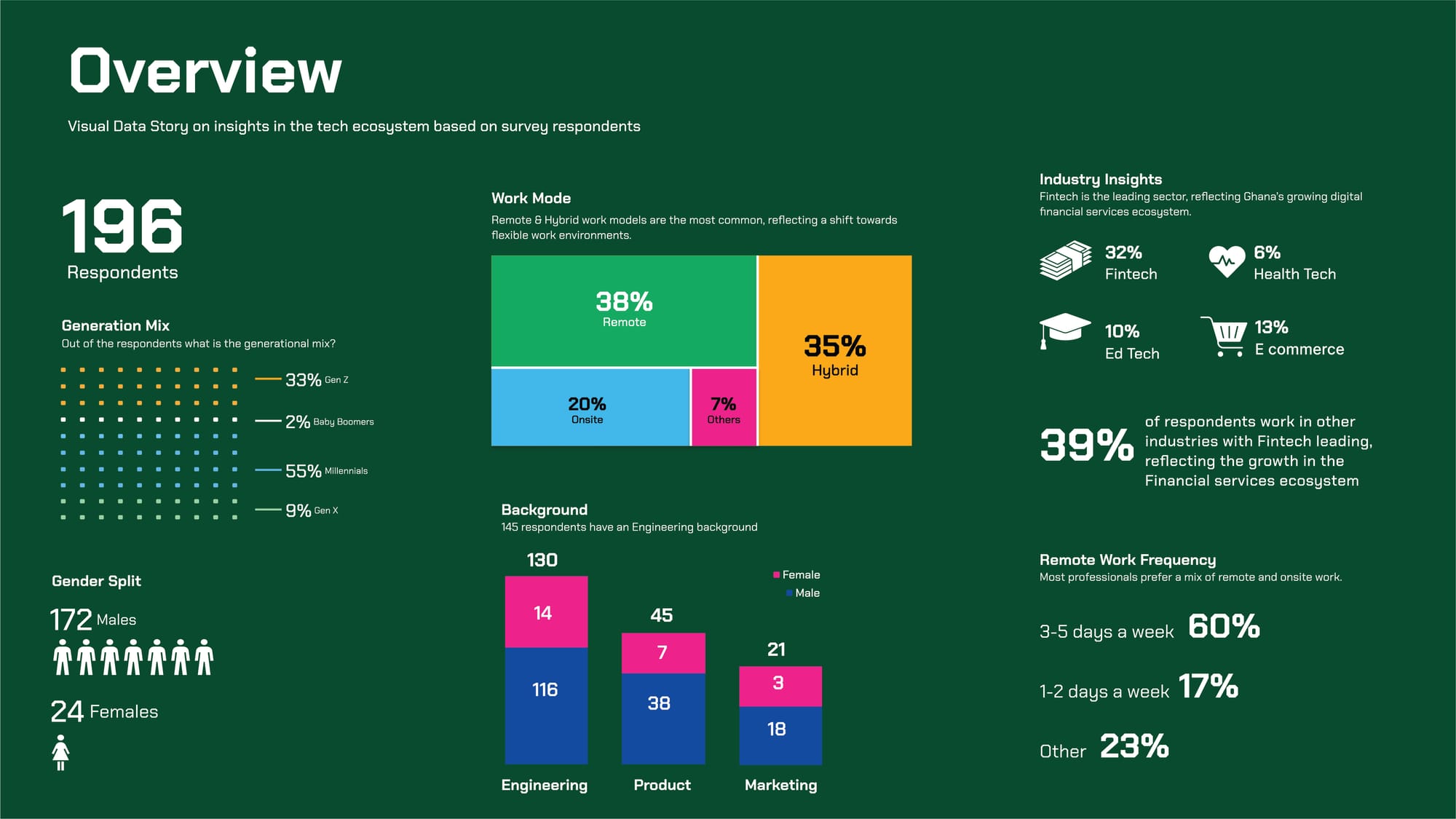
Ghana’s tech workforce is predominantly young, with over 60% aged 25-34.
The industry has a significant gender gap, with 87% of respondents being male, highlighting the need for greater inclusion.
2. Leading Sectors
FinTech, EdTech, and E-commerce dominate Ghana’s tech space.
FinTech employs about a third of respondents, reflecting Ghana’s growing digital financial services sector.
3. Work Trends
73% of respondents work remotely or in hybrid settings.
Factors influencing this shift include:
The impact of the COVID-19 pandemic.
Traffic congestion in cities, particularly in Accra.
A desire for better work-life balance.
4. Salaries and Compensation
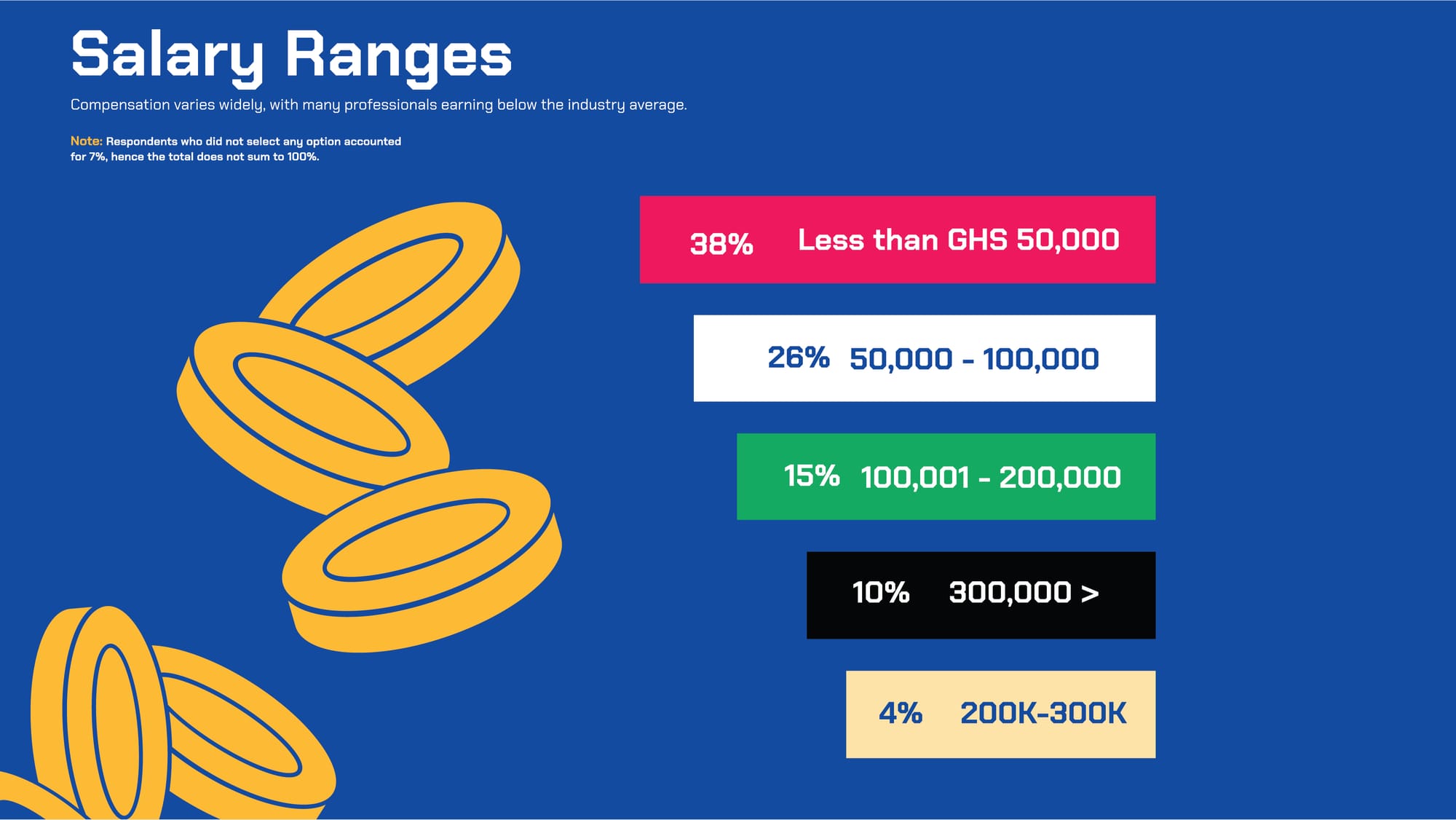
38% of respondents earn less than GHS 50,000 annually, while only 10% make over GHS 300,000.
Compensation is linked to experience and education:
Experienced professionals earn higher salaries.
Those with higher academic qualifications are paid twice as much as degree holders.
FinTech professionals with 7+ years of experience earn the highest salaries.
5. Technical Expertise
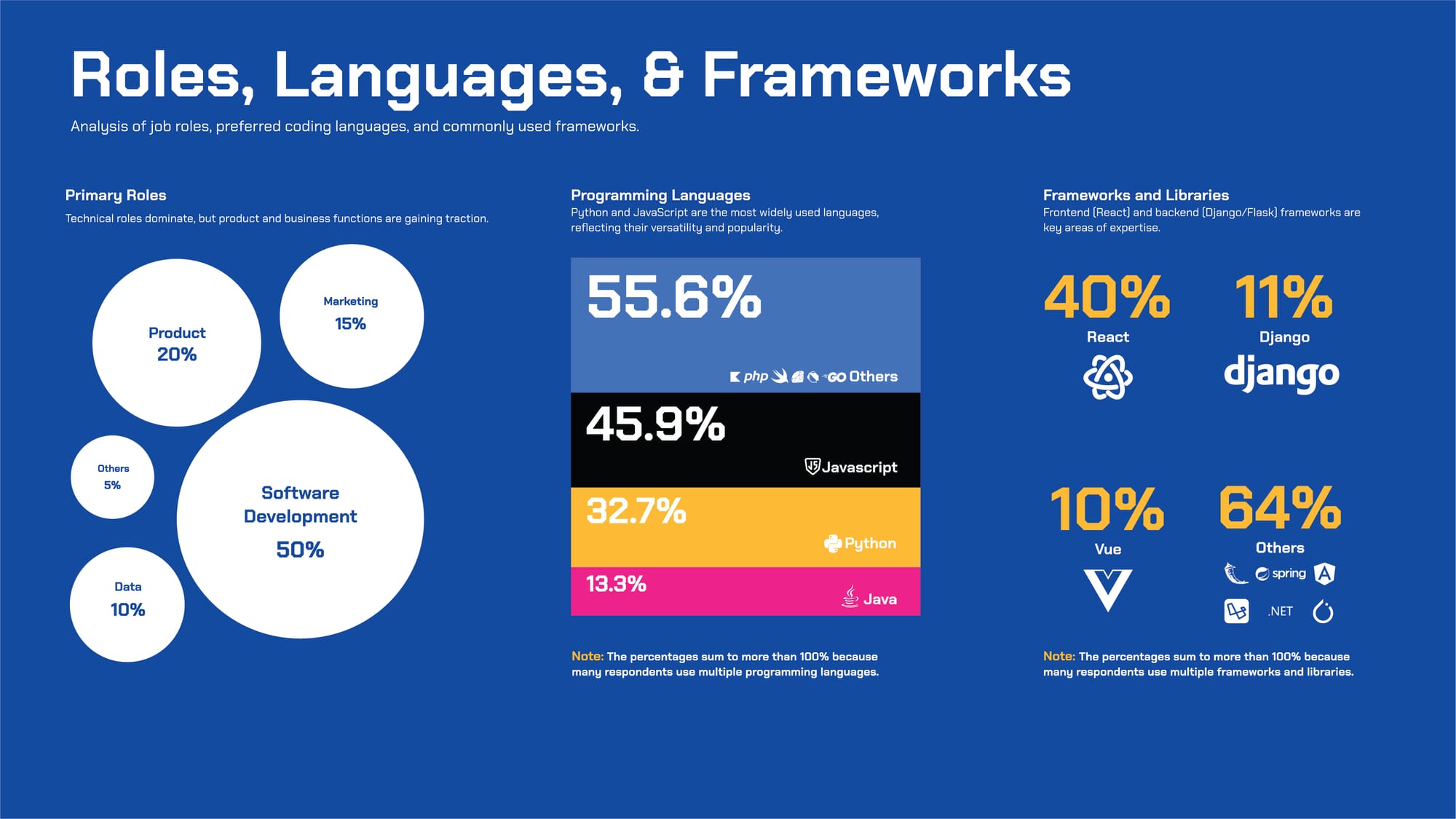
Software development dominates the industry, followed by marketing, product management, and data science.
Python and JavaScript are the most widely used programming languages.
Challenges in the Tech Ecosystem
Despite the growth, several issues hinder progress:
Low Compensation – Many startups struggle to offer competitive salaries, leading to brain drain.
Poor Infrastructure – Internet speed and reliability remain major bottlenecks.
Lack of Collaboration – Limited partnerships between government, companies, and educational institutions.
Recommendations for Growth
To unlock Ghana’s tech potential, a collaborative approach is necessary:
Government: Invest in tech infrastructure, standardize salary structures, and promote gender diversity.
Companies: Offer competitive salaries and organize career training programs.
Educational Institutions: Align curricula with industry needs and encourage more female participation.
Conclusion
The Ghana Tech Ecosystem Survey 2024 provides a valuable overview of the industry’s current and future potential. Despite challenges, Ghana’s tech ecosystem is young, thriving, and expanding—positioning itself as a major player in Africa’s digital economy. The journey has begun.
Presented by https://www.codeandcocktails.live/it is crucial to understand its growth, trends, challenges, and future potential
Africa is rising, and the world is watching