
Before agriculture became a sector measured in venture capital, startup valuations, and digital platforms, it was measured differently. It was measured by seasons, by soil, by the smell of cocoa drying under the sun, by knowing when the rains were coming and what could be planted on it.
I learned this before I understood words like supply chains, logistics, or agricultural technology.
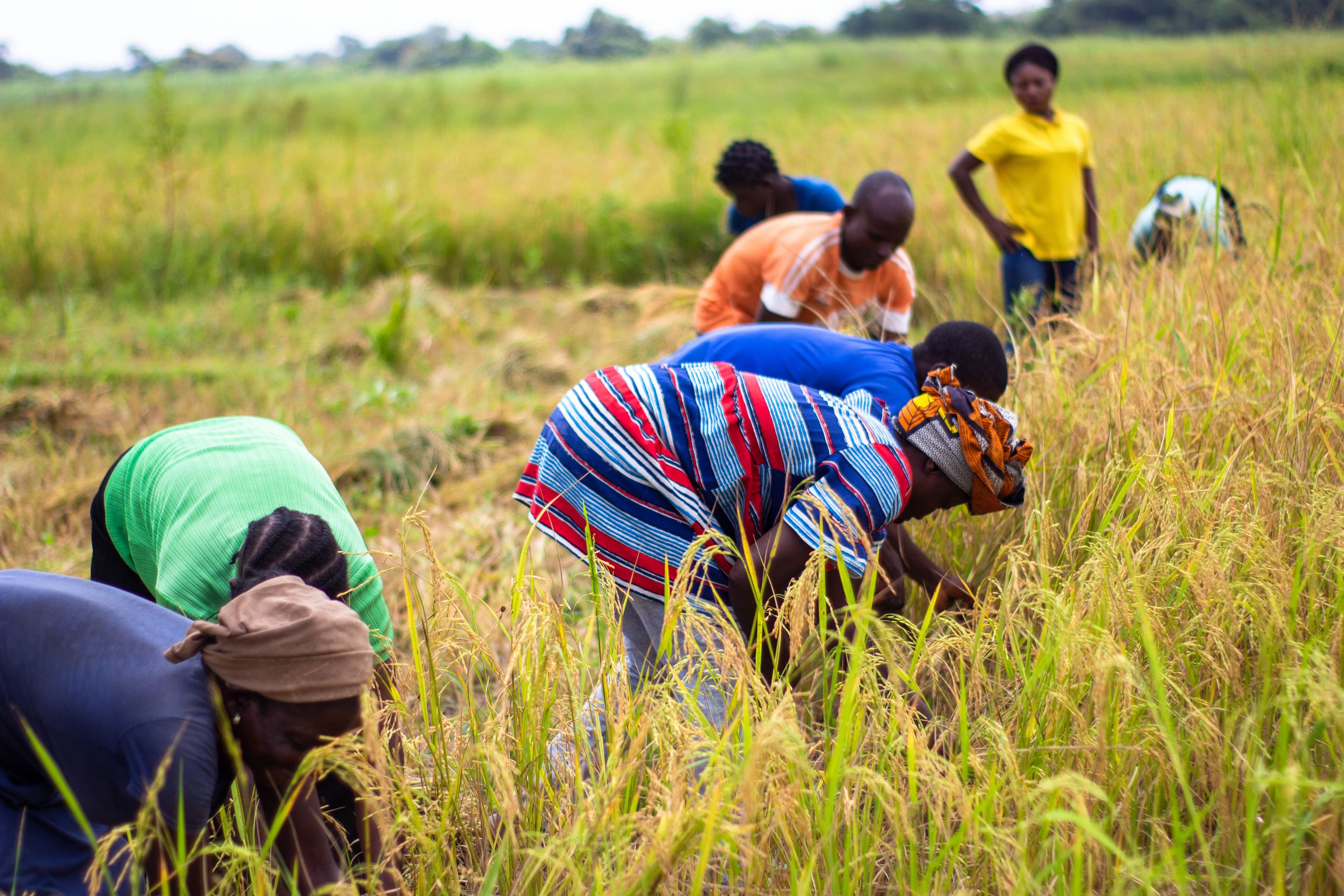
Growing up in Akim Oda, farming was not a distant economic activity. It was part of our everyday life. My uncle did not need a dashboard to tell him when the land was ready. He knew the language of his farm. He knew the crops that belonged to each season, the patience required for cocoa, and the labour hidden behind every harvest. My aunt's garden carried its own smaller version of that knowledge. Peppers. Kontomire. Food growing close enough that the journey from soil to kitchen could be measured in footsteps.
I remember the smell of cocoa drying in the sun. I remember the flowers that appeared before the pods. I remember helping my cousins scoop cocoa beans from freshly opened pods while the discarded shells slowly fermented nearby. At the time, I did not have the language for what I was witnessing. I did not call it a supply chain, a market system, or agricultural knowledge. It was simply how farming worked.
The farm was never just land. It was memory, inheritance, knowledge passed from one generation to the next.
What Technology Promised, and What It Missed The promise of agritech was not built because farmers knew nothing. It was built on the belief that technology could strengthen a system already carrying knowledge, but struggling with distance, inefficiency, and limited access to markets and finance. Agritech promised to become that bridge. A farmer could hold an agricultural library in the palm of their hand: weather forecasts before planting, market prices before selling, and connections to buyers beyond the limits of a local marketplace. But those tools entered a system where information was never the only missing piece. Beneath the digital layer sat deeper challenges: land recognition, roads, storage, logistics, and capital. Technology could connect the pieces of agriculture. It could not automatically build the pieces that were missing.
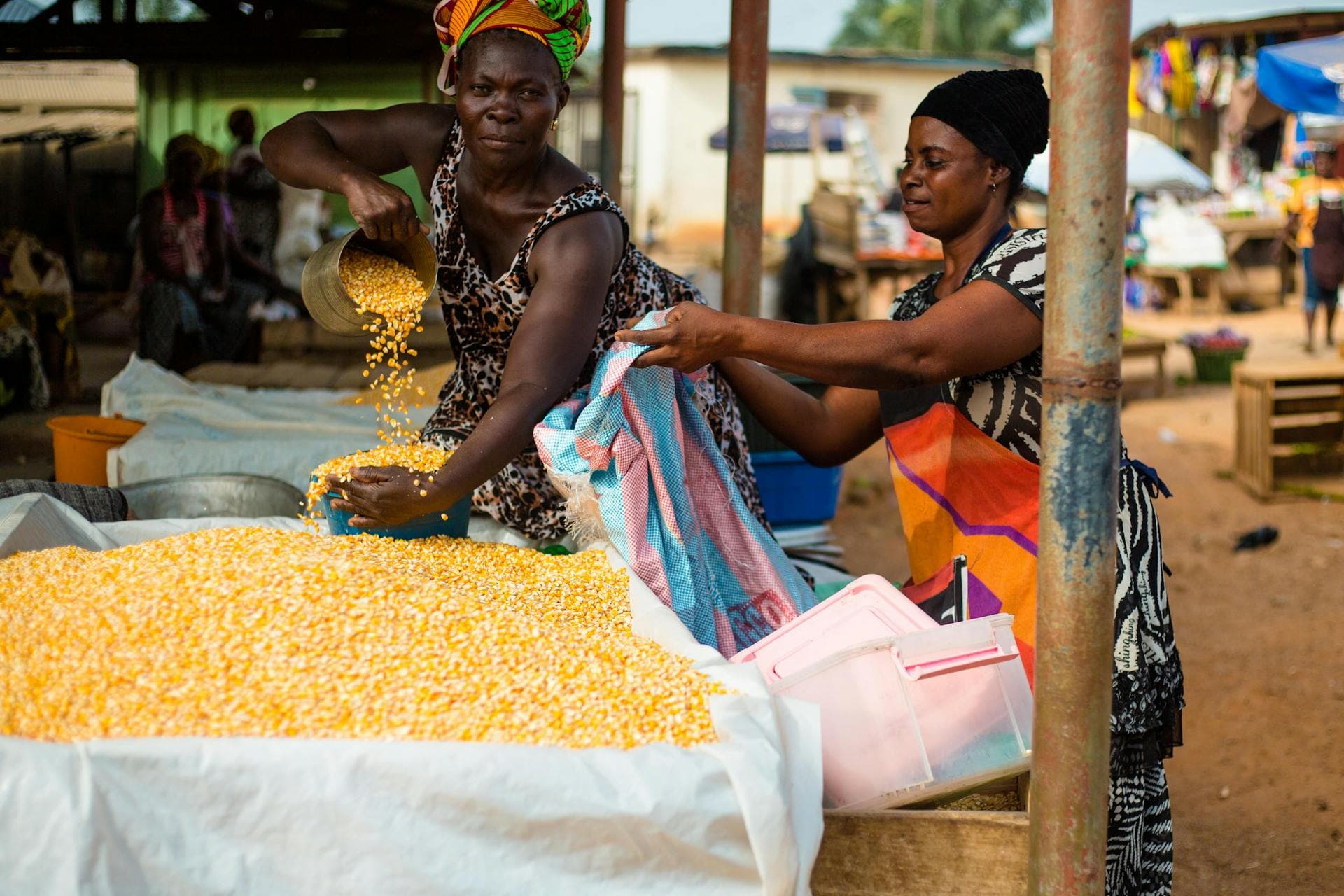
Accra wakes up before its markets do. Market women wait for the trucks before dawn, ready to fill their stalls. When the produce is finally offloaded, the tomatoes at the bottom of the crate are already squashed, flattened under the weight of everything stacked on top of them the whole length of the journey. Some have split open, gone soft at the edges. The market women sort fast: the good ones go to the stalls, the split ones get set aside, reduced to clear before they're worth nothing at all. Behind them, a few young men wait for whatever's left, to resell what the stalls won't take.
The software could connect the farmer to the market. It could not control what happened between the farm and the market. The damage happened long before the customer ever saw the tomato. Somewhere between the farm and the market, the physical journey had already decided its fate.
But agriculture was never only fragmented. It was layered. Information was only one layer beneath roads, storage, land tenure, logistics, financing and institutions. Technology could connect the people inside the system. It could not replace the parts of the system that had never been built.
That gap shows up in two places at once: in what farmers own and cannot yet turn into capital, and in what startups build and cannot yet turn into infrastructure. They are the same problem, seen from two different vantage points.
The Land Problem: When Ownership Isn't Legible to Capital
For many farmers, ownership does not begin with a document. It begins with memory. It lives in the stories passed down by grandparents, in the boundaries pointed out by elders, in the trees planted by previous generations and in the knowledge of who has cultivated which piece of land over time.
This does not mean the land is unknown or unclaimed. It means ownership has historically been recorded through relationships, inheritance and community recognition rather than only through formal documents.
But when that same farmer enters a financial system seeking credit, the question changes. The question is no longer: "Who knows this land belongs to you?" It becomes: "Can you prove ownership in a form the institution recognises?"
The challenge appears when this form of ownership meets a financial system built around documentation. The community may recognise the farmer's relationship with the land. A bank, however, needs evidence it can verify, value, and use as security for a loan.
A farmer can cultivate land for years, produce crops, and have deep knowledge of the soil, yet still struggle to access the credit needed to expand production. This gap matters because land is often a farmer's greatest asset. Without a recognised pathway between ownership and finance, that asset remains difficult to convert into the capital required to purchase inputs, expand production or adopt new technology.
For Ghanaian farmer Emmanuel Darkey, this gap between agricultural potential and financial recognition was not theoretical but painfully practical. Speaking to African Business in 2022 about his experience accessing finance for his sweet-potato production and processing business, he said: "The banks are not helping. I sent applications to a few banks and the process can take three years in addition to the documents they will be asking for. It is too much."
"They prefer funding someone who brings toothpicks from China than to fund someone here to produce because they know their money is intact," he says.
His frustration reveals a gap between agricultural productivity and financial recognition. A farmer can have land, experience, buyers, and years of production behind them, yet still struggle to access the capital required to grow. Emmanuel's experience reflects a wider challenge across African agriculture. For many rural farmers, the assets that support their livelihoods remain difficult to translate into the financial systems required for expansion.
Wepia A. Awal Adugwala, National President of the Peasant Farmers Association of Ghana, has pointed to the same structural gap from the institutional side. Even Ghana's own Agricultural Development Bank, set up to serve farmers, tends to lend toward commercial-scale operators who can produce the documentation and collateral it requires, leaving smallholders on customary land largely outside its reach.
The World Bank's 2013 land report found that only about 10 percent of rural land in Sub-Saharan Africa was formally registered, with the rest undocumented and informally administered, leaving many landholders vulnerable to disputes, expropriation, and inadequate compensation. The figure is over a decade old, but the World Bank was still citing the same 10 percent baseline as recently as 2024, suggesting the underlying land administration systems have changed slowly enough that the number still holds.
The issue is therefore not the absence of ownership, but the gap between different definitions of ownership. The farmer may know exactly what they possess. The financial system may not know how to recognise it.
The title deed became one attempt at that translation. By converting land claims into a formal document, it creates something banks can evaluate, governments can record, and markets can recognise. But a title deed is not a magic key. It can prove that someone has a claim to land, but it does not automatically create access to finance, markets, or agricultural success. A farmer can hold a document and still face the same questions of income stability, production risk, infrastructure, and buyer access.
The challenge is not simply giving farmers documents. It is building systems where what farmers already possess can move through the institutions designed to support them.
The Business Model Problem: Owning the App, Not the Journey
The same gap that kept Emmanuel Darkey's land illegible to a bank shows up again, in a different form, inside the startups meant to serve farmers like him. What looked like isolated startup failures began to resemble a pattern.
Researchers Ankit Chandra and Ishani Lal of the University of Nebraska-Lincoln identified this pattern in a white paper published in January 2026 examining agritech shutdowns worldwide. Analysing eighteen publicly reported shutdowns across North America, Europe, Asia, and Africa, they describe what they call the Cost-Adoption Mismatch Effect: cases where the capital and operational burden of a technology exceeded what farmers could sustainably absorb, even when the technology's performance was validated. The paper looked at shutdowns across several continents, but the pattern it names applies just as directly here.
The problem was not necessarily that the software was poorly designed. It was that the economics surrounding it never aligned with the reality of the people expected to use it. Even an effective product struggles when the cost of adoption exceeds what the market can realistically sustain.
The research explains why many startups struggled to reach farmers: the problem was not only building a useful tool, but building the conditions that could make it work. Some founders responded by moving beyond the software layer and attempting to build the missing infrastructure themselves. Twiga Foods became one of the clearest examples of this approach, and of what that bet can cost.
Twiga Foods discovered the missing-infrastructure problem from the opposite direction. The company initially built a digital marketplace connecting farmers and vendors, but co-founder and then-CEO Peter Njonjo argued that agriculture could not be solved through an asset-light model alone. The company, he wrote, balked against the trend of asset-light models that did not build competitive advantage. Twiga leased farmland, built a large tech-enabled distribution centre, and launched its own private-label goods, believing the missing advantage was ownership of the systems underneath the marketplace: distribution, logistics and movement.
But Twiga's journey also reveals the uncomfortable weight of owning the farm floor. Warehouses, trucks, leased farmland and distribution networks require constant capital to maintain, and as global interest rates rose and funding conditions tightened after 2022, that weight became harder to carry. Twiga laid off roughly 280 staff in August 2023 and a further 59 in August 2024. Njonjo left the company in early 2024, and under new CEO Charles Ballard, Twiga has since consolidated its operations into a new holding structure, cut several hundred more roles, and shifted toward a leaner, more asset-light model, a reversal of the infrastructure-ownership bet Njonjo had described only a year earlier. Being right about what agriculture needed did not make building it any less expensive, or any easier to sustain once cheaper capital disappeared.
Ghanaian agritech founder Alloysius Attah saw the limitation of a purely digital approach from the start. When Farmerline raised $12.9 million in pre-Series A funding in 2022, he described the company's vision as building a digital and physical infrastructure layer for agriculture: a system that could move information, goods, and services between farmers and markets.
He told TechCrunch: "We think of ourselves as the Amazon of farmers. A digital and physical infrastructure powering a marketplace that allows the movement of goods and services to and from rural areas."
Attah's explanation of the company's plans reveals the distinction. Farmerline wanted to strengthen warehouses and distribution channels while working with logistics partners rather than bringing every part of the physical system in-house, a narrower bet than Twiga's, and one that has so far proven easier to sustain.
The lesson is not that every agritech company must become a logistics company, or that owning infrastructure is always the wrong call. It is that digital tools only create value when they are connected to the physical systems agriculture depends on, and that the capital funding that infrastructure has to be patient enough to survive the years it takes to pay off. Land needed a translation layer between community recognition and bank documentation. Startups needed a translation layer between software and the physical systems it was meant to coordinate. Neither gap closes by adding more code, and neither closes on a venture timeline.
The Money Problem: When the Wrong Kind of Capital Meets the Wrong Kind of Problem
Nigeria's ThriveAgric shows what that mismatch looks like when it reaches investors directly rather than founders. Founded in 2017 by Uka Eje and Ayodeji Arikawe, ThriveAgric financed smallholder farmers by pooling money from retail investors through a crowdfunding model, promising them a share of the harvest returns. When the Covid-19 pandemic disrupted Nigeria's supply chains in 2020, buyers could not pay for crops already supplied, and, by the company's own account, over 90 percent of more than 400,000 poultry birds in one scheme died after lockdowns cut off access to markets. ThriveAgric could not pay hundreds of retail investors what it owed them, and the backlash, under the hashtag ThriveAgricPayYourInvestors, became public and sustained.
The company survived by abandoning the retail crowdfunding model entirely and rebuilding around institutional capital: partnerships with commercial banks, the Central Bank of Nigeria, the World Food Programme and USAID. By 2022 it had raised $56.4 million in debt financing to fund that rebuild. Looking back at what had gone wrong, CEO Uka Eje told TechCabal that agritech was not just about having a website and asking people for money, and that it was about building the infrastructure that supports the food production value chain. ThriveAgric's near-collapse was not a failure of the underlying business. It was retail capital, structured to expect fintech-style liquidity, meeting a farming cycle that could not deliver on that timeline, and it took patient, institutional money to fix.
Which raises the same question at the level of the whole sector: if Africa's agritech problem is physical rather than purely digital, was venture capital ever designed to finance the kind of businesses the sector actually needed?
Venture capital has traditionally rewarded businesses that scale quickly without accumulating heavy physical assets. Agriculture often demands the opposite. Warehouses, cold storage, logistics networks and land administration are expensive, local and slow to build. They require patient capital long before they generate venture-style returns.
According to Partech Africa's 2024 Africa Tech Venture Capital report, agritech equity funding fell 38 percent to $88.6 million in 2024. The 2025 report shows the sector essentially treading water since: equity funding ticked up 5 percent to $93 million across 31 deals, while agritech debt funding, a smaller pool to begin with, fell 75 percent to $22 million. Partech describes the sector's trajectory as flat, reflecting persistent challenges around scalability, margins, and capital efficiency, even as sectors like cleantech and healthtech more than doubled their funding in the same year.
Yet the more uncomfortable question is whether the problem began when the money slowed, or whether it existed even when the money was flowing. If much of that capital was chasing scalable software while the real bottlenecks remained physical, then the issue may never have been a shortage of investment alone. It may be a different understanding of what agricultural investment is meant to build.
So what kind of money does agriculture actually need? Agriculture does not reject technology. It rejects the idea that technology can arrive alone. A farmer marketplace may scale digitally, but the systems that make that marketplace valuable often cannot. Cold storage, roads, logistics networks, irrigation, land administration and farmer organisations require investment timelines that look very different from traditional venture capital, and investor expectations, whether from a venture fund or a retail crowdfunding platform, that look different from what farming can promise in return.
What This Means for Who Builds Next
The pattern across land, startups and capital points to the same decision, made three times over. Farmers needed a translation layer, not a new asset. Founders needed patient partners for the physical layer, not more pressure to look asset-light for the next raise, and not the whiplash of building owned infrastructure on one funding cycle only to strip it back on the next. Investors, retail and institutional alike, needed underwriting models built for infrastructure and harvest timelines, not venture or fintech timelines stretched to fit.
None of this argues against building software for African agriculture. It argues against building only software, or only infrastructure without the patient capital to hold it, and expecting either to substitute for what land registries, warehouses, and roads still owe the sector. The founders worth watching next are not the ones with the cleanest app. They are the ones who can name, specifically, which physical or institutional layer their product depends on, and who is paying to build it on a timeline that survives a downturn. The investors worth watching are the ones willing to underwrite that layer directly, on a timeline that matches how long land, storage and trust actually take to build, rather than funding a marketplace, or a harvest, and hoping the rest catches up on its own.
Flawless code cannot carry a broken farm floor. The next agricultural revolution will be built by whoever finally treats that floor as the investment, not the afterthought.