

Africa's venture ecosystem spends an extraordinary amount of time searching for the next big opportunity.
Investors scan sectors, follow funding trends and debate whether artificial intelligence, climate technology or fintech will produce the continent's next generation of billion-dollar companies. Yet in that search, they may be overlooking one of Africa's oldest and most resilient builder classes.
African women.
This is not an argument about inclusion. It is an argument about markets.
Because long before venture capital arrived, before accelerators, incubators and startup competitions, women across Africa were already building distribution networks, financing trade, moving goods across borders and creating economic systems that millions of people depended on.
The irony is difficult to ignore.
The continent that celebrates innovation may have inherited investment frameworks that struggle to recognize the builders who were already here.
Africa's original builders
Before anyone called it venture capital, women crossed into Togo, Benin and neighbouring countries to negotiate trade, moving textiles, food, household goods and wealth across West Africa.
They connected suppliers to customers, financed inventory, managed logistics, built trust across borders.
They understood pricing before algorithms did and customer behaviour before anyone coined the phrase product-market fit.
They were not simply traders.
They were operators.
They were builders.
Today, nearly 26% of adult women in Sub-Saharan Africa are engaged in entrepreneurial activity, among the highest rates anywhere in the world, while women make up roughly 58% of the region's informal workforce.
The language may have changed over the decades, but the instinct to build has not.
Across West Africa, few stories illustrate this better than the women of Lomé's Grand Marché.
Known as the Nana Benz, these textile traders built one of the region's most influential commercial networks through Dutch wax fabric imports, controlling regional distribution and accumulating extraordinary wealth. Their nickname came from the Mercedes-Benz cars they famously drove.
Between 1976 and 1984, they controlled an estimated 40% of Togo's informal economy. Their influence stretched beyond commerce into politics, where they became major financiers of national leadership.
These were not women waiting for capital. They were capital.
They built networks that modern startups would describe as distribution moats.
They built customer loyalty before loyalty programs existed.
They built cross-border supply chains before logistics became a venture category.
They built markets.
The builders who rebuilt
Makola Market in Accra tells a similar story.
To outsiders, it is a marketplace, but to those who understand African commerce, it is infrastructure.
If you needed fabric, electronics, cooking utensils, school supplies, baby products or funeral cloth, Makola almost certainly had it. The market did more than sell products. It coordinated livelihoods, connected producers with consumers, distributed goods across entire regions and powered everyday economic life.
When soldiers demolished the market in 1979, blaming traders for Ghana's economic difficulties, it was easier to blame the women than the policies that had failed.
The buildings disappeared. The businesses did not.
The traders rebuilt. That resilience should sound familiar to anyone studying African entrepreneurship today.
Because the defining characteristic of builders is not that they never fail. It is that they build again.
Capital's blind spot
Despite this history, Africa's investment ecosystem tells a very different story.
According to Partech Africa's 2025 report, women-only founding teams received just 0.9% of venture funding on the continent, roughly $28.8 million out of $3.2 billion invested during the year.
Male-only teams secured approximately 91%. The gap is now wider than at any point since systematic tracking began.
The contradiction is striking. Women continue to build businesses across sectors. They continue to create jobs. They continue to understand customers with remarkable precision.
Yet formal capital continues to flow elsewhere.
This is often presented as evidence of inequality. It may also be evidence of market inefficiency. Because capital markets are only as good as the frameworks they use to identify opportunity.
If those frameworks cannot recognise African builders unless they resemble Silicon Valley founders, then capital is not merely excluding entrepreneurs.
It is mispricing opportunity itself.
The startup ecosystem that already existed
The first time I got lost in Market Circle in Takoradi, I was walking beside my mother. The stalls looked identical. Within minutes I could no longer find her. Someone nearby smiled and told me to stay exactly where I was.
"She'll come back." She did.
Years later, what stays with me is not getting lost. It is remembering how the market worked. Traders knew which products would sell before customers asked. They understood pricing, inventory cycles and consumer behaviour through experience accumulated over decades.
Hawkers called confidently to strangers because they knew attention could become demand and demand could become revenue.
That is customer acquisition.
That is market research.
That is distribution strategy.
That is market intelligence.
It simply does not come with a pitch deck.
Too often, Africa's informal economy is described as though it exists outside innovation.
The opposite may be true.
Many of the systems investors celebrate today were quietly built decades ago inside African markets by women who had no formal access to capital but understood exactly how economies functioned. The informal market may well be Africa's original startup ecosystem.
The cost of measuring Africa with borrowed frameworks
Every investment ecosystem creates assumptions about what success looks like. The language changes, but the filters remain remarkably consistent.
Scalable.
Venture-backable.
Technology-enabled.
Founder-led.
Those frameworks were largely shaped elsewhere. Africa imported many of them.
The problem is that Africa's economy has always looked different. It has often grown through trade networks before digital platforms, through trust before contracts and through community distribution before formal retail. Women have been central to those systems for generations.
When capital fails to recognise those builders, the cost is larger than an individual founder missing a cheque.
The cost is economic.
The African Development Bank estimates a financing gap of more than $42 billion for women-owned businesses across the continent.
The International Monetary Fund has argued that closing gender gaps could increase GDP by as much as 10% in some African economies.
This is not simply a conversation about representation. It is about productivity and returns. It is about whether capital is accurately identifying Africa's highest-potential builders.
The question worth asking
The question is no longer whether African women can build.
History settled that long ago. The Nana Benz settled it. Makola settled it.
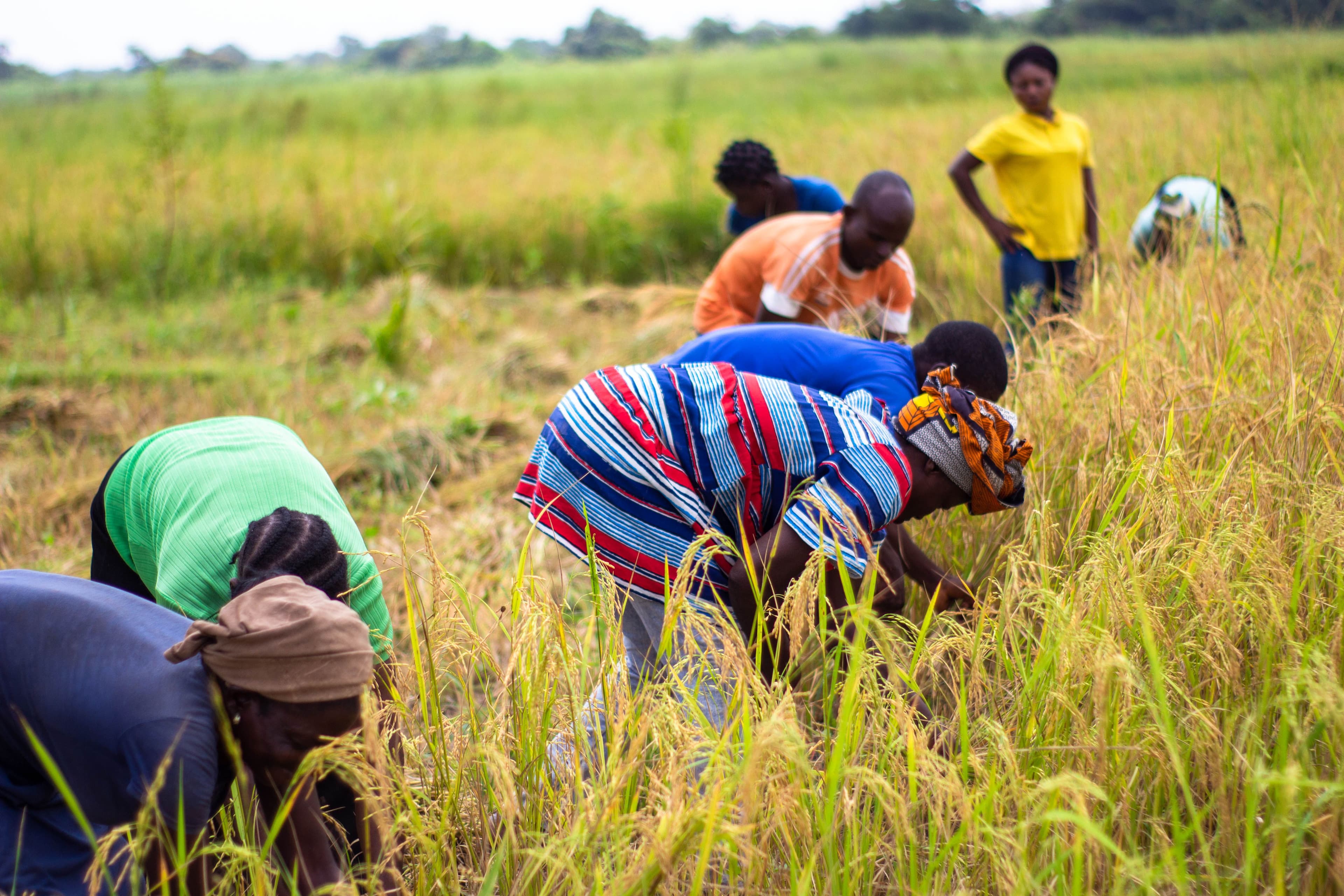
Millions of women running markets, factories, farms, logistics businesses and startups settle it every single day.
The better question is whether Africa's investment ecosystem knows how to recognise builders when they do not fit imported definitions of innovation.
Perhaps Africa's next great investment opportunity is not hidden inside a new sector.
Perhaps it has been hiding in plain sight inside markets the venture ecosystem never learned to value. Because African women have never waited for permission to build.
They built before the frameworks existed.
They rebuilt when those frameworks collapsed.
And if capital continues to measure Africa with borrowed tools, it may spend the next decade searching for opportunities that have been standing in front of it all along.