
On the morning of January 1, 2025, while much of Ghana was welcoming a new year, Kantamanto was burning.
A fire ripped through West Africa's largest second-hand clothing market, destroying thousands of stalls, livelihoods and years of accumulated capital. For the traders, tailors, transport operators and artisans who make the market what it is, the blaze was not simply the loss of merchandise. It was the destruction of businesses painstakingly built over decades.
Yet what happened after the fire may be even more revealing than the fire itself.
Kantamanto rebuilt.
Not because a comprehensive public recovery programme emerged. Not because global fashion brands whose discarded clothing fills its bales stepped forward in force. Much of the rebuilding was driven by the resilience of the community itself, supported significantly by organisations such as The Or Foundation, whose long-standing work in the market has focused on environmental justice and circular systems.
That story reveals a truth Ghana still struggles to recognise.
Kantamanto is often treated as a problem to be managed.
In reality, it is one of the country's most remarkable examples of economic innovation.
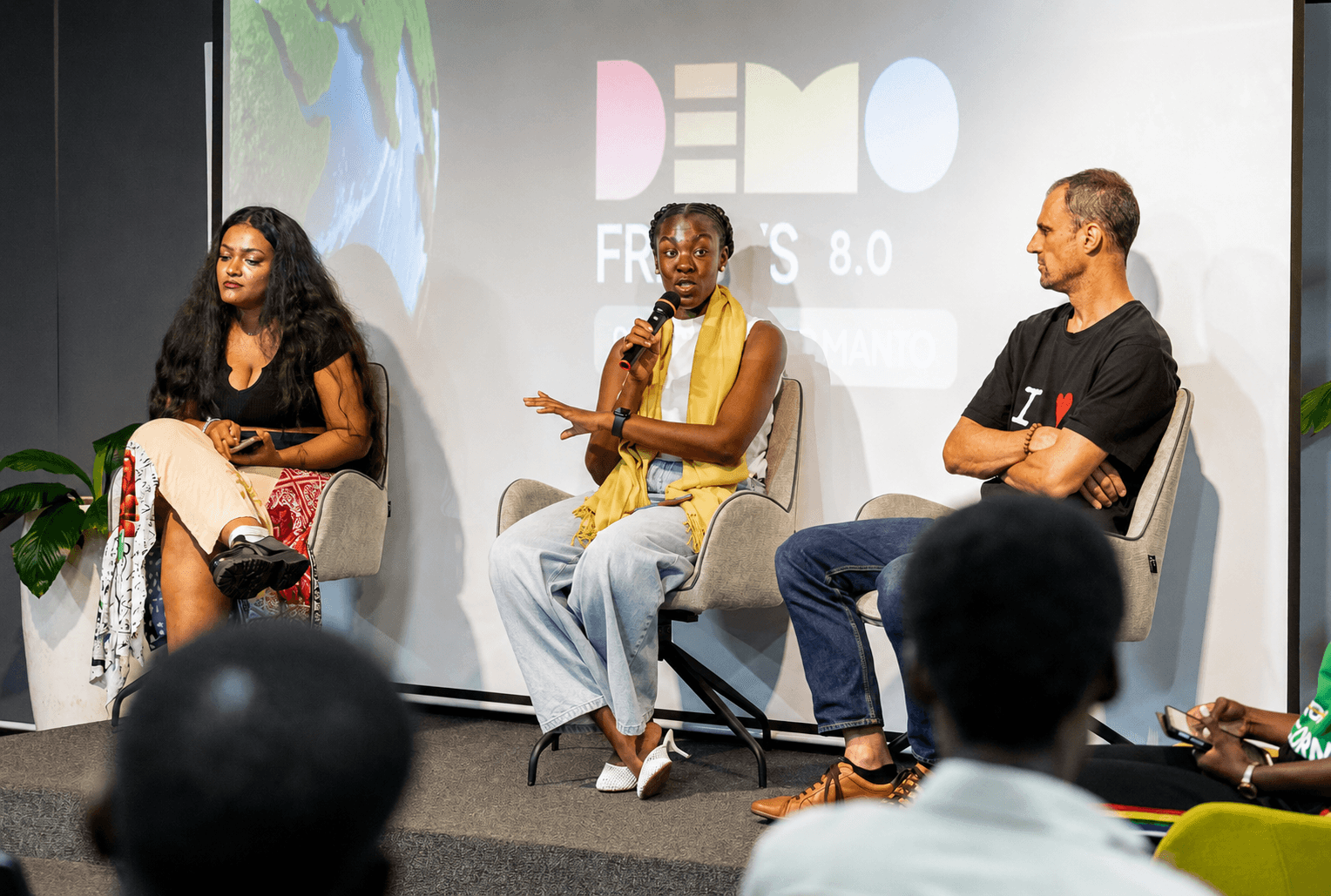
That was the central insight emerging from Demo Fridays 8.0, organised by Insights Lab in partnership with Brif Africa, under the theme "Saving Kantamanto: Sustainable Innovations to Build Ghana's Economy." While the event brought together entrepreneurs, researchers, policymakers, sustainability practitioners and ecosystem builders, its most important contribution was not another conversation about waste.
It challenged participants to rethink the question entirely.
As the discussions unfolded, one idea became increasingly clear: saving Kantamanto is not simply about protecting a market. It is about building the systems that allow an already thriving circular economy to grow.
The Economy That Already Exists
For many people, Kantamanto begins and ends with second-hand clothing.
That is a mistake.
The market is not merely a destination for used garments. It is an industrial ecosystem built around extending the life of products. Every day, traders recover value from discarded goods. Tailors repair damaged clothing. Designers transform old textiles into new products. Transport operators, dyers, printers, artisans and merchants sustain an intricate network of economic activity that keeps millions of garments in circulation each month.
According to The Or Foundation, more than 30,000 people depend directly on this ecosystem, while millions of garments arriving from the Global North are recirculated through resale, repair, reuse and remanufacturing. Long before the phrase circular economy entered boardrooms, climate summits and policy papers, Kantamanto had already become one of its largest living examples.
No ministry designed it.
No accelerator incubated it.
No venture fund assembled it.
It evolved through necessity, entrepreneurship and the quiet ingenuity of people determined to create value where others saw waste.
And that may be the market's greatest lesson.
For years, policymakers have spoken about building a circular economy as though it were a destination somewhere in the future. Kantamanto suggests something far more uncomfortable: the circular economy already exists. What has been missing are the institutions willing to recognise it, invest in it and build around it.
Innovation Is Already Ahead of the System
This idea echoed throughout Demo Fridays 8.0.
Founders from Sanasana Sustainability, FeatheryCare, Skan Africa, Zippy Courier Delivery and ShopPaddy demonstrated solutions spanning sustainable production, circular commerce, logistics and community innovation. Their businesses addressed different challenges, yet together they reflected a larger reality.
Ghana's entrepreneurs are not waiting for perfect conditions.
They are already building.
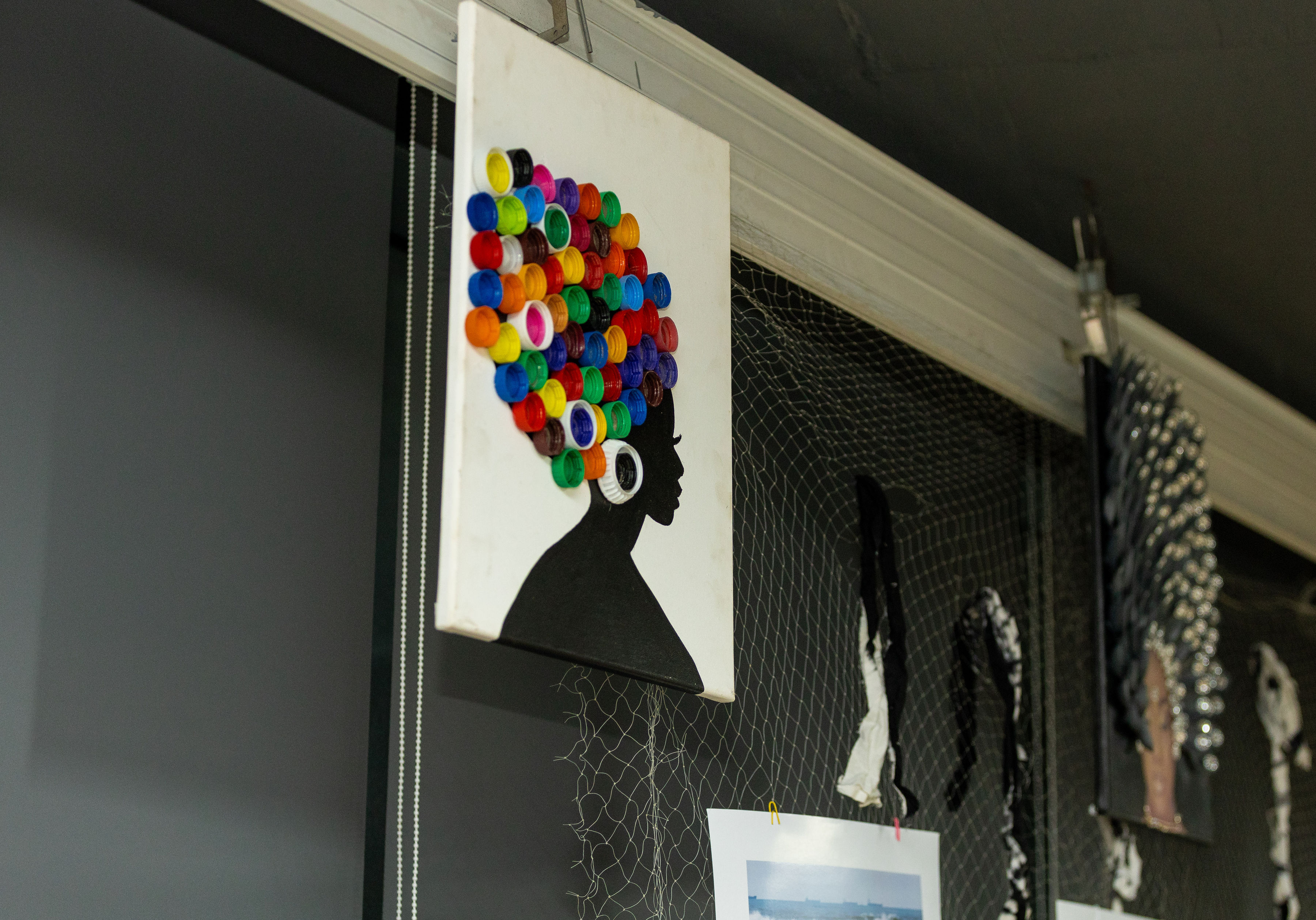
Around them, organisations including The Or Foundation, COLIBA, Upcycle It Ghana, the Ghana Youth Environmental Movement (GYEM) and the Ghana Circular Economy Centre contributed expertise on recycling, climate innovation and sustainable enterprise. Exhibitions by Environment360, Enactus University of Ghana and Plastic Punch transformed recycled materials, photography and recovered products into powerful reminders that sustainability is not merely an environmental conversation.
It is increasingly an economic one.
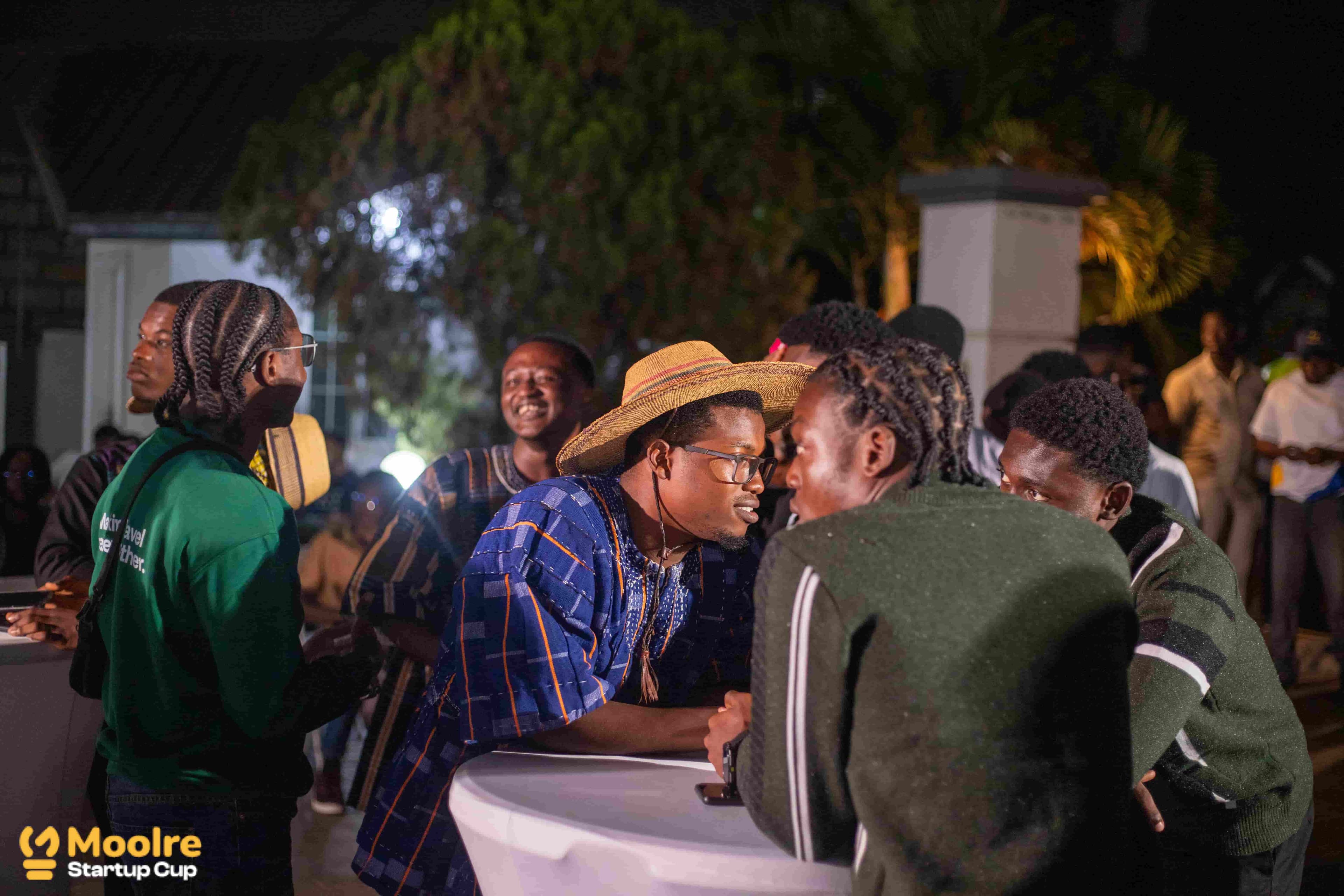
The event itself became a reflection of the ecosystem it sought to strengthen. Founders stood alongside researchers. Environmental advocates exchanged ideas with investors. Students, development organisations and industry leaders occupied the same space, each approaching the same challenge from a different perspective.
Not because they were searching for innovation.
But because innovation was already in the room.
The Missing Piece Isn't Ideas
One message surfaced repeatedly throughout the day's discussions.
Ghana's greatest shortage is not innovation.
It is systems.
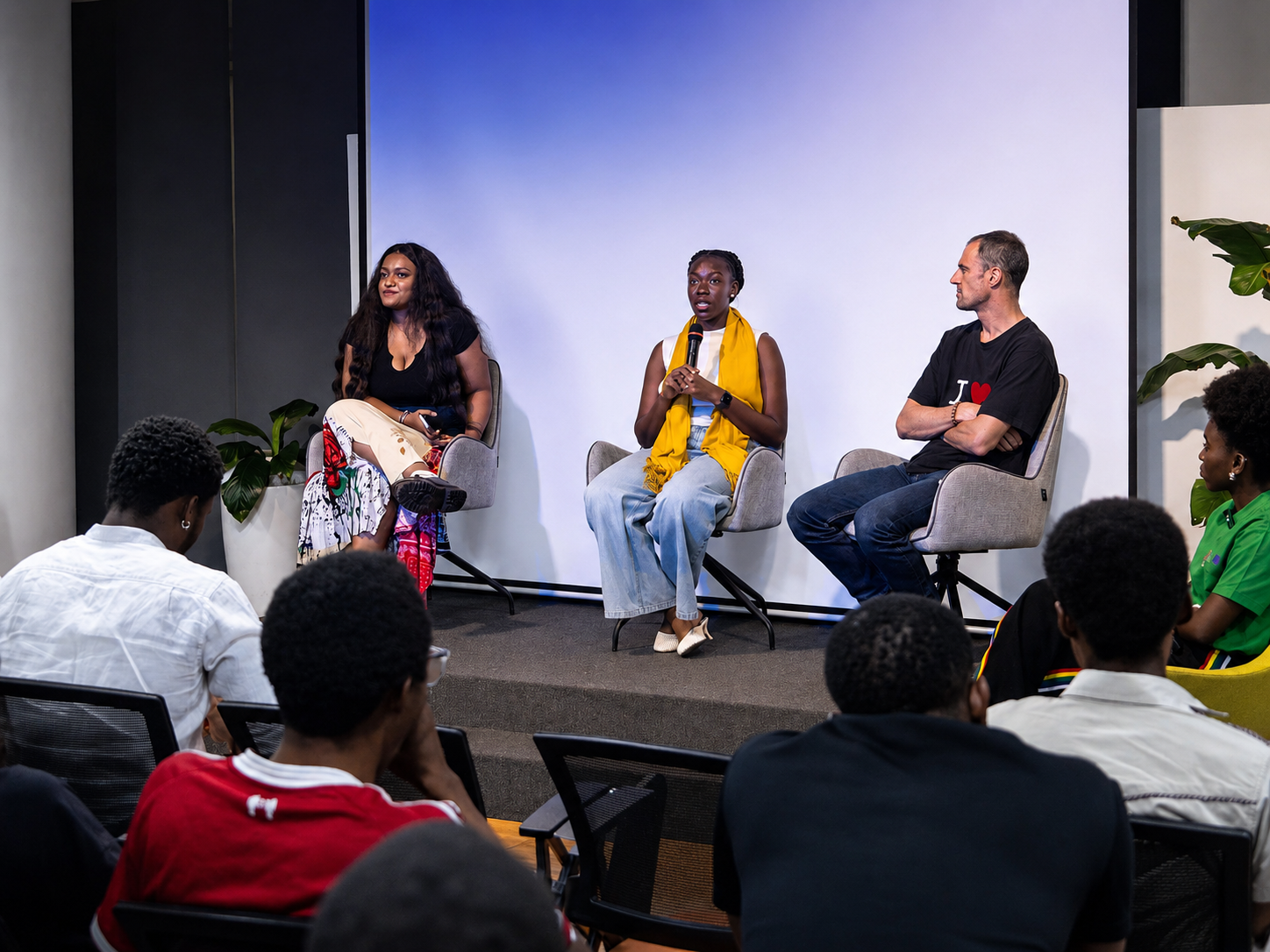
During the panel conversation, Katia Osei of The Or Foundation reflected on the realities traders face when public systems fail to support one of the country's most important commercial ecosystems. Nabeela Abubakari, founder of goTo Initiative, challenged participants to recognise the circular economy already operating inside Kantamanto before attempting to redesign it. Thomas Le Guével of Kofa pointed to the technological and operational barriers that continue to limit the scale of promising circular solutions.
Together, their perspectives converged on a single argument.
Innovation is abundant.
Infrastructure is not.
Entrepreneurship is thriving.
Institutions are struggling to keep pace.
Markets like Kantamanto do not fail because people stop innovating.
They fail when the systems surrounding that innovation fail to evolve alongside it.
From Rescue to Industrial Strategy
This distinction matters because the language we use shapes the solutions we pursue.
If we think about saving Kantamanto, the response naturally becomes humanitarian. Relief after the fire. Donations after disaster. Emergency interventions whenever the next crisis arrives.
Necessary, yes.
Transformational, no.
But if we think about building Kantamanto, the conversation changes.
It becomes a question of industrial policy.
How do we finance circular businesses operating at an informal scale?
How do we build infrastructure that reflects the market's true economic importance?
How do we generate reliable data, strengthen logistics, modernise waste systems and create investment pathways that allow existing businesses to grow rather than merely survive?
Around the world, governments are investing billions into circular manufacturing, textile recovery and sustainable production. Yet one of Africa's most sophisticated circular economies already exists—not inside an industrial park or research laboratory, but inside an informal market in central Accra.
The challenge is no longer proving that circular innovation works.
Kantamanto has already done that.
The challenge is deciding whether Ghana will build around it.
Beyond Demo Fridays
Events alone do not transform economies. But they can transform the questions we ask.
Demo Fridays 8.0 succeeded not because it produced immediate solutions, but because it reframed the problem. Instead of asking how Ghana can rescue Kantamanto, participants were invited to consider a more consequential question:
What if one of the country's greatest innovation assets has been overlooked precisely because it has always existed outside the formal economy?
That question should not end with the event.
It should shape how founders design businesses, how investors evaluate opportunity, how policymakers allocate resources and how development partners support communities already doing the work.
The future of Ghana's green economy will not be determined by the number of conferences held on sustainability. It will be determined by whether the country finally chooses to invest in the ingenuity that has quietly sustained markets like Kantamanto for decades.
Countries are often remembered for the industries they chose to build. Ghana may one day be remembered for the industry it almost overlooked. Every week, millions of garments arrive at Kantamanto.
The real question is no longer what happens to the clothes. It is what Ghana chooses to do with the ingenuity of the people waiting for them.