

For the first time in Ghana's modern mining history, a $205 million mining deal has been structured without a multinational at the centre. The borrower is not Gold Fields. Not Newmont. Not AngloGold Ashanti. It is Engineers & Planners (E&P). This is not just a milestone. It is a stress test for the company, for the banks, and for an entire policy model that Ghana is betting its mining future on.
What This Deal Really Signals
There is an easy version of this story to tell. A Ghanaian company secures $205 million in financing from Stanbic Bank Ghana, backed by Standard Bank Group. It is framed as a win for local content, a breakthrough for indigenous enterprise, and proof that Ghanaian companies can operate at scale.
That version is not wrong. But it is incomplete. What is happening here is bigger and more precarious. Ghana is not just financing a company. It is testing whether the financial architecture behind its indigenous mining ambitions can hold the weight being placed on it. In less than eight months, Engineers & Planners has taken on over $325 million in structured debt, acquired a dormant gold concession, and accepted operational control of a major mine from a departing multinational. Each of those is a serious undertaking. All three at once, funded primarily by debt, with no precedent to fall back on; that is a different kind of proposition entirely.
Here is what we think this moment reveals: Ghana has built the most sophisticated institutional pathway to indigenous mining ownership on the continent. But the company at the centre of it is absorbing more risk, faster, than its operational history can yet justify.
That does not mean it will fail. It means the margin for error is thinner than the headlines suggest.
The Structure Tells the Real Story
The $205 million facility is split into two tranches: $110 million and $95 million. It carries a five-year maturity and is structured as a senior secured facility.
Based on available reporting and standard financing conventions, the larger tranche is a term loan; capital drawn down for equipment procurement, fleet expansion, and infrastructure build-out for hard-rock extraction. The smaller tranche is likely a revolving credit facility, providing flexibility to manage working capital cycles: fuel, payroll, spare parts, logistics.
One part builds the business. The other keeps it alive. Capex is conviction. Working capital is survival.
The facility is denominated in US dollars, matching E&P's dollar-denominated contract revenue from Gold Fields, eliminating foreign exchange mismatch. The five-year maturity aligns with the expected horizon of E&P's mining contracts, a standard risk-mitigation feature in project finance: the loan tenor matches the revenue window.
Under Ghana's Borrowers and Lenders Act of 2020, the security interests would be registered in the national Collateral Registry. The specific collateral package has not been publicly disclosed, but in mining contract finance at this scale, "senior secured" typically implies receivables from the Gold Fields contract, liens on E&P's heavy equipment fleet, and potentially an assignment of the contract itself. The gold is not the primary security. The cash flow is.
Why This Deal Is Structurally Different
Previously, when Ghanaian banks syndicated at this scale in mining, the borrower was always a multinational. The foreign mining company was the primary obligor, the anchor of creditworthiness. Local companies operated within those structures. They did not lead them.
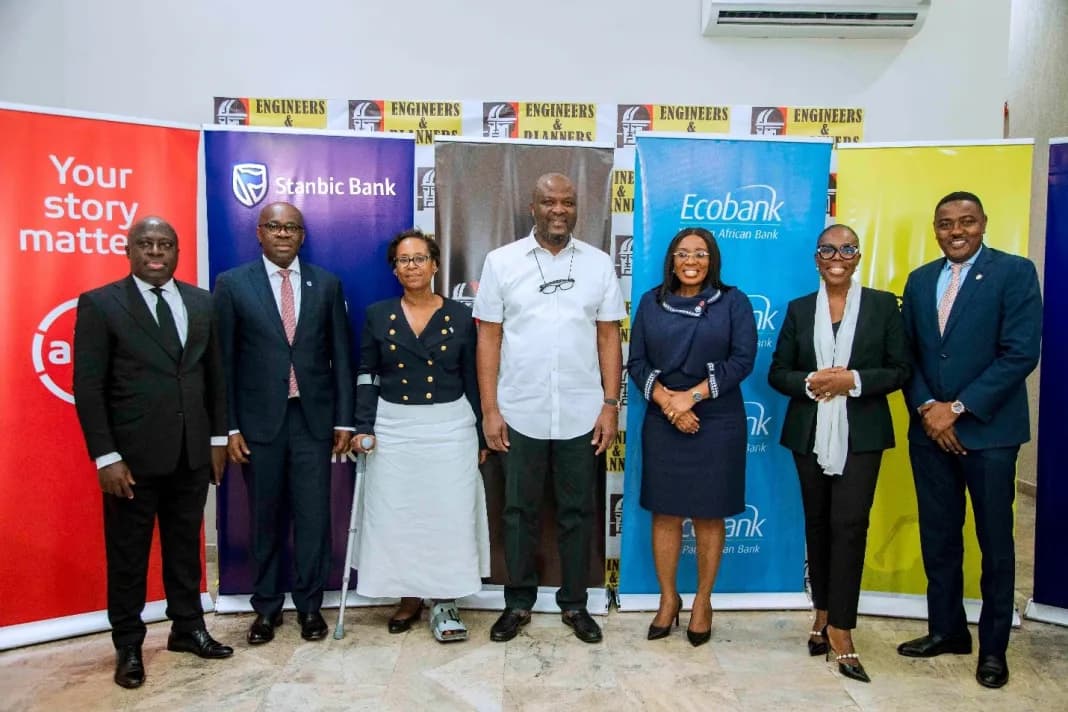
Here, four banks, Stanbic Ghana and Standard Bank of South Africa as arrangers, Ecobank Ghana and Absa Bank Ghana as participants, have underwritten a wholly Ghanaian-owned company at $205 million without a foreign guarantor standing behind it. Stanbic and Standard Bank have now arranged cumulative facilities for E&P exceeding $450 million across more than two decades. That is not a transaction. It is a relationship.
And it signals something the broader market is watching: that indigenous African operators may be graduating from participants to primary obligors in structured finance. If E&P services this debt on schedule, it lowers the perceived risk premium for the next indigenous borrower across the continent. If it defaults, it raises it.
The Company Behind the Capital
Founded in 1997 by Ibrahim Mahama, Engineers & Planners has spent nearly three decades in one of Africa's most demanding industries. The company employs over 4,200+ people, operates one of the largest privately held heavy equipment fleets in West Africa, and has invested a cumulative $1.85 billion in the Tarkwa and Damang mining enclave. They do not own gold reserves. They make extraction possible.
From drilling and blasting to hauling and infrastructure development, E&P's role has been to execute the most physically intensive part of the mining value chain. They have done it at Golden Star's Wassa mine, at ArcelorMittal's iron ore concession in Liberia, where they reopened commercial mining after two decades of civil war, and at Gold Fields' Tarkwa and Damang operations for years. In March 2026, they dispatched thirty Caterpillar 785D dump trucks to Tarkwa — high-production surface mining machines that are not purchased by companies guessing at scale. In mining, credibility is not declared. It is built one contract at a time, over decades. That track record is what the banks are backing.
The Bigger Play: More Than $325 Million
The Stanbic facility is only one leg of a broader capital strategy. Separately, the ECOWAS Bank for Investment and Development (EBID) approved a $120 million facility for E&P to acquire and develop the Black Volta Gold Project. This concession had sat dormant since 1992 under Australian-listed Azumah Resources. E&P paid $100 million for full ownership.
This introduces a critical distinction: The $205 million finances E&P as a contractor, performing mining services for Gold Fields, backed by predictable contract revenue. The $120 million finances E&P as an owner, developing its own mineral asset, backed by geological reserves and future gold production. One is backed by contracts. The other is backed by belief.
The fact that commercial banks arranged the first, while a development finance institution funded the second, tells you how the market prices the difference. EBID stepped in where commercial lenders hesitated, underwriting a transaction that had been entangled in a dispute before the International Chamber of Commerce after Azumah attempted to terminate the acquisition, claiming non-performance. E&P's legal team prevailed.
At Black Volta, E&P has already moved beyond paper ownership. In December 2025, a $37 million equipment agreement was signed with FLSmidth: crushers, SAG and ball mills, thickeners, cyclones, and a full absorption-desorption-refining circuit. That is processing infrastructure. The metallurgical capability critics say E&P lacks, it appears to be building.
Expected output: 170,000 ounces annually for more than fifteen years. If it delivers, Black Volta becomes the first large-scale, fully indigenous gold mine in Ghana's history.
From Execution to Ownership: The Transition That Changes Everything
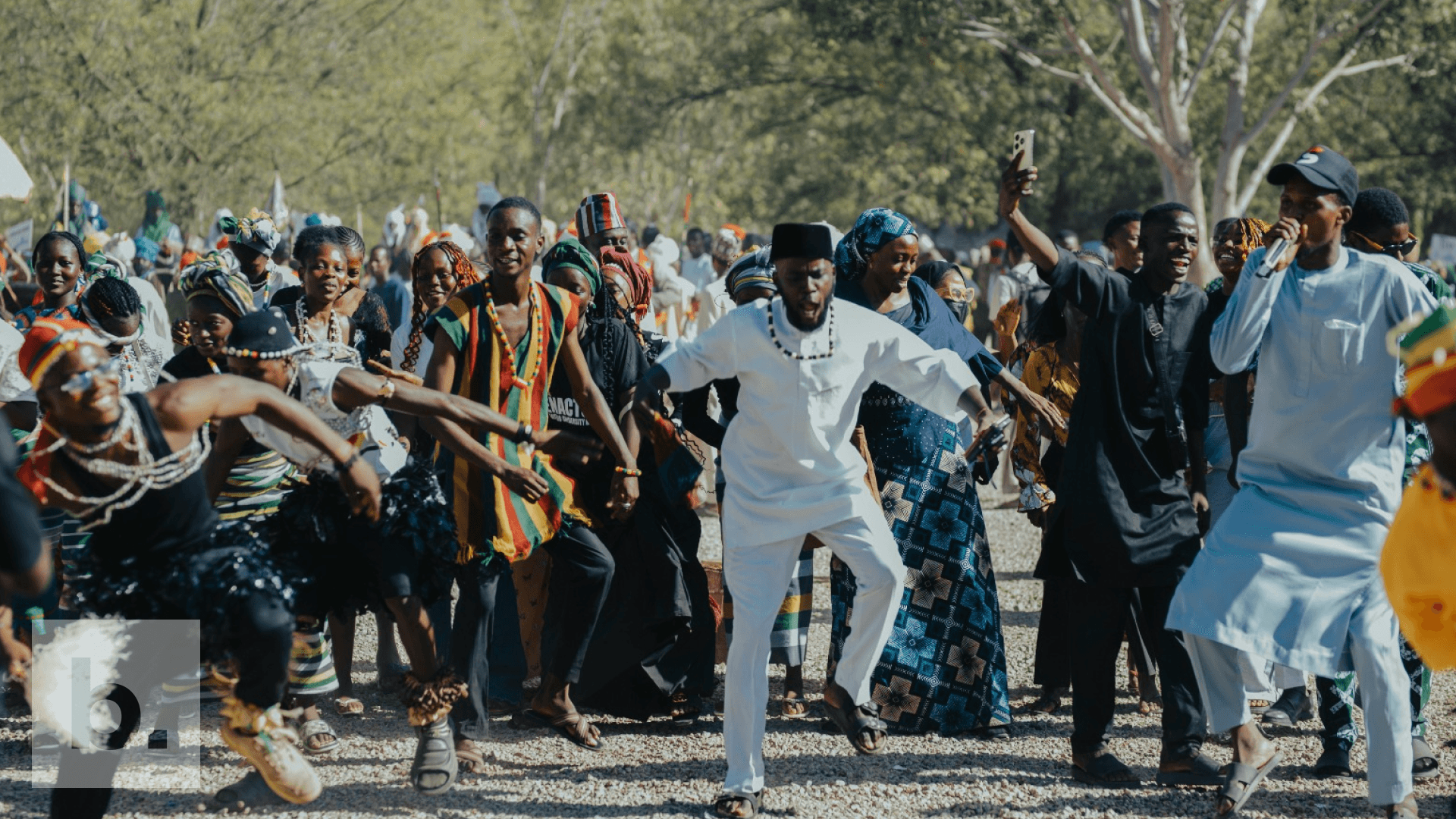
On April 18, 2026, the Damang Gold Mine was formally transferred from Gold Fields to Engineers & Planners. The mine is being rebranded as Damang Gold Mines Limited, carrying the Dzata symbol. This is where the story stops being about capital and starts being about capability.
As a contractor at Damang, E&P's responsibilities were primarily blast, load, and haul, the earthmoving segment of a larger operation. Gold Fields handled everything else: processing, metallurgy, geology, environmental compliance, power contracts, hedging, treasury, and export logistics.
The ore at Damang is not straightforward. Gold Fields' technical data shows it contains pyrrhotite: a sulphide mineral that consumes oxygen during leaching, and preg-robbing carbonaceous matter that intercepts dissolved gold before recovery. Gold Fields addressed this through specialist plant modifications built on years of operational data. That metallurgical knowledge does not transfer automatically with a lease. Neither does Gold Fields' power contract with Genser Energy, which was built on years of creditworthiness. Neither does its gold hedging capability. Gold Fields received $2,385 per ounce for Damang gold in 2024, a price many smaller operators struggle to capture due to timing mismatches and limited treasury sophistication. These are institutional advantages that a first-time operator cannot assume it inherits. Execution built the company. Ownership will test it in ways execution never did.
The Room's Other Reality
Ibrahim Mahama is the brother of Ghana's current president, John Dramani Mahama. This fact shapes how every element of this story is received, and the article would be incomplete without addressing it directly.
The company's timeline, however, complicates the simplest version of the criticism. E&P's pursuit of Damang began in September 2023, over a year before the December 2024 election. The Black Volta acquisition agreement was signed in October 2023. Sir Sam Jonah, Ghana's most prominent mining figure, publicly endorsed the deal. In the Damang tender, E&P scored 93.15 percent, the highest among four bidders, and was the only company to meet the minimum technical threshold.
Both realities can coexist. E&P's operational credentials are demonstrable. And the President's brother is the primary beneficiary of a government policy restricting major mining tenders to indigenous firms, under a government led by his brother.
The systems-thinking question is not whether E&P earned its position. The tender score suggests it did. The question is whether Ghana's institutions, the Minerals Commission, the Ministry of Lands, the courts, and the banking regulators are robust enough to ensure that merit-based outcomes remain merit-based regardless of who is in power. That question outlasts this deal and this administration. It is the question that determines whether the model is replicable or a one-off.
The Risks Beneath the Momentum
Ambition at this scale introduces specific, identifiable risks, not hypothetical ones. E&P is currently pursuing a reported $740 million claim against Gold Fields over previously paused contracts. That litigation, if it escalates, could strain the very relationship that underpins the $205 million facility's cash flow.
The alleged $68 million fleet-modernisation debt from 2020, raised in ongoing court proceedings by policy analyst Bright Simons, suggests the company may have struggled to service debt at a fraction of the current scale when Gold Fields reduced Damang operations. The claims are contested, but they are on the public record.
Damang has a documented history of acid mine drainage and tailings management challenges. Environmental groups are watching. Independent verification of E&P's environmental certifications has not been publicly cited.
And there is a structural question no public source has addressed: the $205 million facility was designed to finance E&P's contract mining work for Gold Fields at Tarkwa and Damang. E&P now owns Damang. It is no longer a contractor there. Does part of the facility lose its original purpose? Does the lending syndicate need to restructure? The transition from contractor to owner may have changed the risk profile that the banks originally underwrote.
What Decision Does This Help You Make?
If you are a founder or operator: capital at this level is tied to decades of demonstrated execution, not pitch decks. E&P's $450 million banking relationship was built over twenty-nine years. The path exists, but it is measured in contracts delivered, not ambition declared.
If you are a young engineer, geologist, or mining professional, E&P now needs metallurgists, process engineers, environmental scientists, and treasury specialists it has never needed before. The contractor-to-operator transition is creating roles that did not exist in Ghana's indigenous mining sector six months ago. Whether those roles go to Ghanaians or expatriates will be the first real test of whether ownership and capacity are growing at the same speed.
If you are watching Ghana's policy model, Gold Fields' Tarkwa lease expires in 2027. What happens at Damang in the next twelve months will determine whether Tarkwa follows the same path or whether the model gets quietly shelved.
The capital is getting closer to home. But capital alone does not build industries. Execution does.
And now, for the first time, an indigenous Ghanaian company has to prove it at the scale where failure is not private, it is national. Watch Damang. Everything else follows from there.