
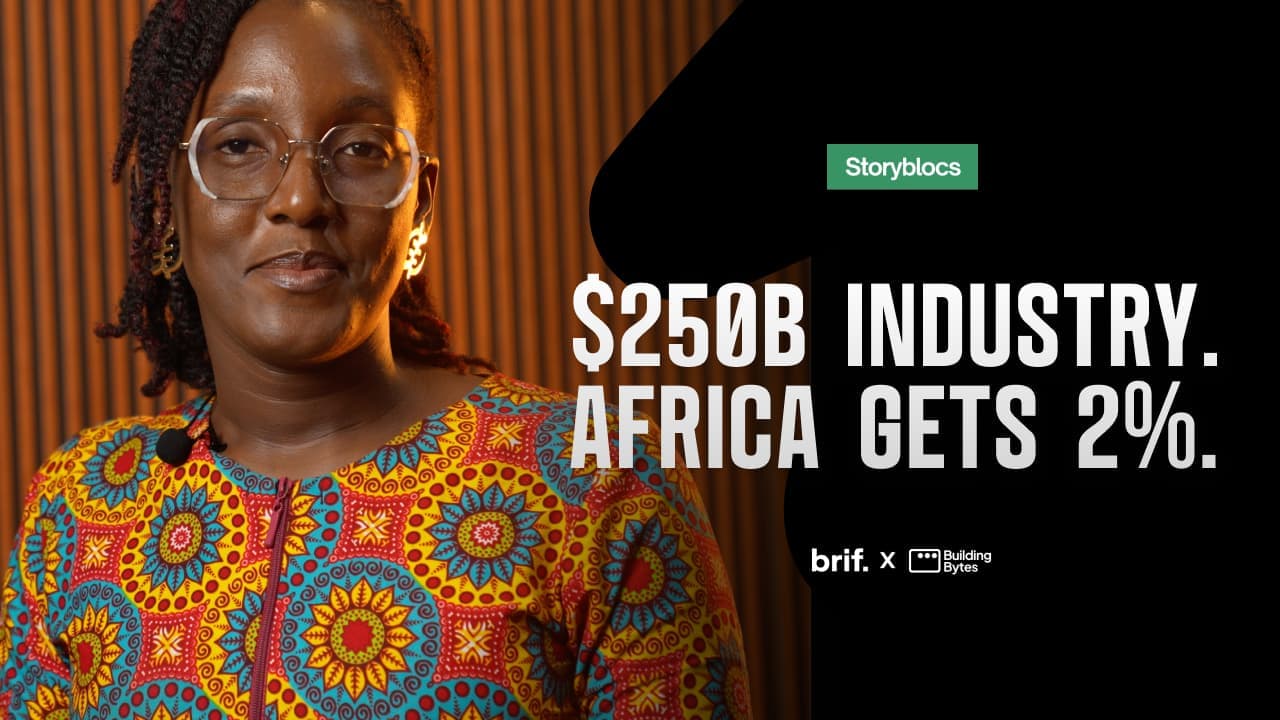
The global creative economy is worth around $250 billion. By Ewuranna Smith-Quayson's count, Africa's share is roughly $3 billion, less than two percent of the pie, on a continent with nearly a fifth of the world's population and arguably its loudest cultural exports. Afrobeats fills stadiums in London. Nollywood out-produces Hollywood by volume. Ghanaian Twitter writes the internet's jokes for free.
So where does the money go?
Smith-Quayson's answer is blunt: it never arrives. "Every single system, every single infrastructure was built around the fact that you have to have a US bank account or a PayPal to earn," she says. The African creator's problem was never talent, and increasingly it isn't even audience. It's the checkout page.
The insight.
Here is the claim worth sitting with: every creator platform is secretly a payments company. Medium, Patreon, Gumroad, Substack; strip away the editors and the feeds and what remains is a machine for moving small amounts of money from fans to creators. That machine was built on American rails. Stripe accounts, US bank details, PayPal balances. For a writer in Osu or a designer in Kumasi, the platform works perfectly right up until the moment it matters most, getting paid, and then it treats you as an edge case.
CrowdPen inverted the build order. Instead of building a content platform and bolting payments on, it built African payment rails and wrapped a creator ecosystem around them. The publishing tools, the community features, the marketplace, all of it sits on top of infrastructure where MTN MoMo, M-Pesa, Telecel Cash, and Airtel Money are first-class citizens, not workarounds. Creators price and get paid in cedis, naira, and shillings. Payouts run weekly, with thresholds as low as GHC 100. The revenue share is 80 percent.
That last detail is the tell. A platform confident in its payment rails can compete on take rate. One that's renting someone else's rails cannot.
The reality.
The honest tension: payments are necessary, but they are not sufficient. A marketplace needs buyers, and the same purchasing-power gap that shrank Africa's slice of the creative economy also constrains who can pay GHC 50 for an ebook. CrowdPen's marketplace launched in February with the claim of being Africa's first creator-first digital products platform, but "first" is a land-grab argument, not a moat. Selar has been selling digital products for African creators for years. Paystack and Flutterwave have made local checkout dramatically less painful for anyone willing to integrate them.
And there is a quieter risk. The all-in-one pitch - write here, sell here, build community here - asks creators to consolidate on a young platform after a decade of being burned by platform dependence everywhere else. CrowdPen's counter is data ownership and exportability. It will need to keep proving that promise as it grows, because the creators it's courting have long memories.
The interpretation.
What makes CrowdPen interesting is not the marketplace itself. It's the thesis underneath: that Africa's two-percent share is an infrastructure artifact, not a demand signal. If that's true, then fixing the rails doesn't just redistribute existing revenue; it surfaces revenue that currently doesn't exist, because thousands of creators never bother to sell what they can't get paid for. The GHC 100 payout threshold is the most important number in the company. It's a bet that the African creator economy is wide, not tall, built from many small earners, not a few stars, and that the platform that serves the long tail first will own the market when the head arrives.
The decision.
For the African creator reading this, the calculus is simple enough to test in an afternoon: list one product, price it in your own currency, and see whether money lands in your mobile wallet by Friday.
For the rest of us, CrowdPen is a referendum on a bigger question: whether the next decade of African digital business gets built on borrowed infrastructure or owned infrastructure. Smith-Quayson has placed her bet. The two percent is the ceiling only if the rails stay foreign.