
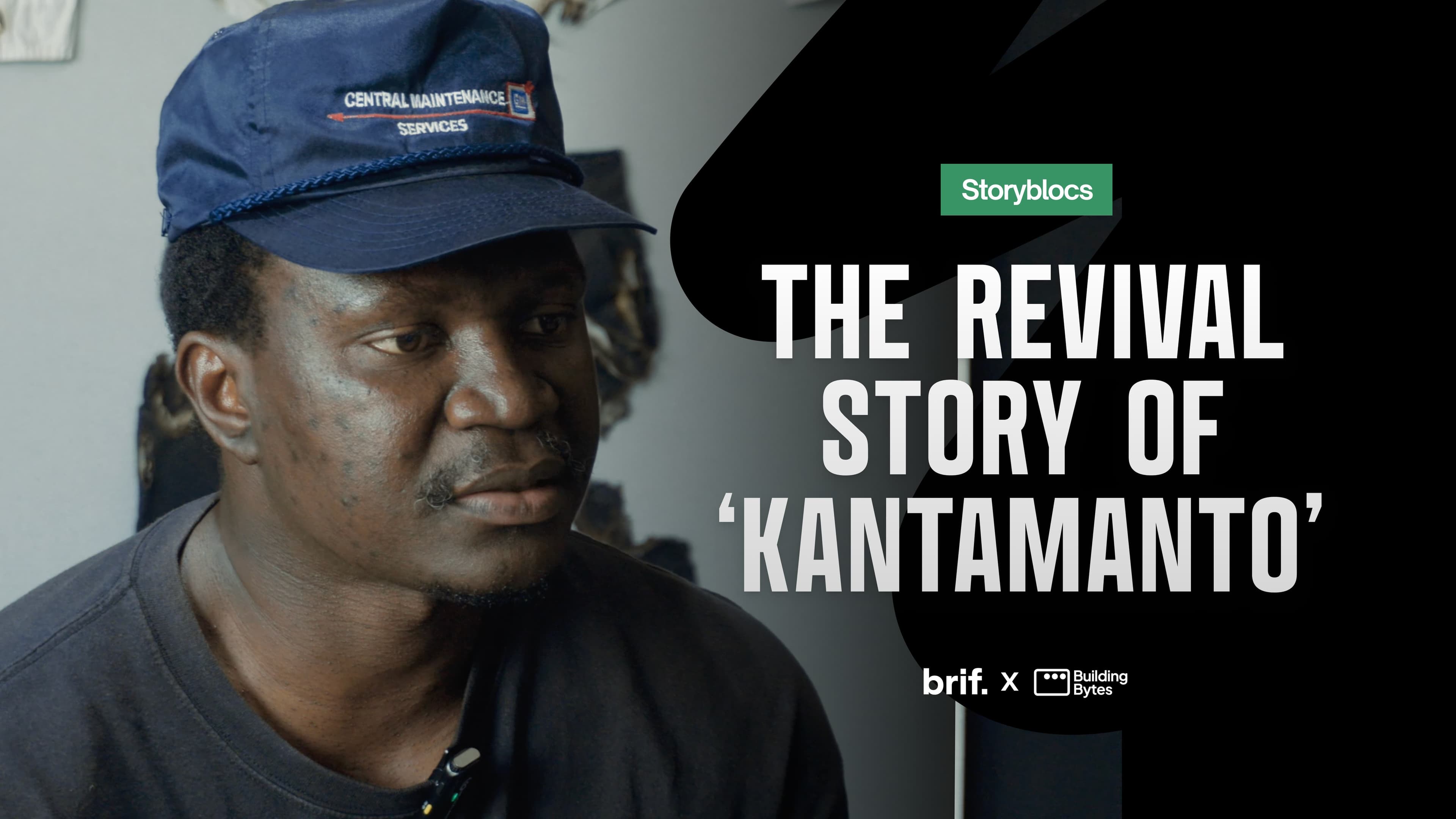
At 2am on 2 January 2025, Yayra Agbofah got the call no market trader wants on the first day of the year: Kantamanto was burning. The fire tore through more than 60% of the retail side of the market, gutting stalls, stock, and the sewing machines people make their living on. Agbofah and his team spent the days after the blaze doing what they could, salvaging, fundraising, helping put the place back together.
But the fire isn't really the story. It's the backdrop to a quieter bet Agbofah has been making since 2018, and the fire only sharpened the question underneath it: what is Kantamanto actually for?
The reflexive way to talk about Kantamanto is as a victim. The world's largest second-hand clothing market, around 30,000 traders, absorbs roughly 15 million garments a week, most of it the Global North's discards, and up to 40% of every bale is unsellable on arrival. That framing has a name now, waste colonialism, and it powers a real and necessary fight: holding the brands accountable, pushing for Extended Producer Responsibility, demanding the senders pay for the afterlife of what they ship.
The Revival accepts that diagnosis. Then it runs the other play entirely. Assume the bales keep coming, because they will for years, and build the thing that turns the unsold 40% into value Ghana captures for itself. Agbofah's framing is blunt: waste is a resource, not a problem. And the solution, he insists, isn't imported. "We're not reinventing the wheel," he says — repair, reuse, and make-do are already woven into Ghanaian street culture. The Revival's job was never to invent a practice. It was to take an informal survival habit and give it infrastructure, intention, and a market.
On the ground that looks like upcycling studios inside Kantamanto, a team trained out of the market's own ranks, traders, and the kayayei, the women and girls who head-carry 55kg bales for a living. It looks like an incubator where a porter who dreamed of being a designer made her first garment. It looks like David Donko, a trader who lost his stall, retrained, and now runs an upcycling label that dresses Ghanaian celebrities. And it looks like export: a collaboration with London's V&A Museum that sells kimono-style jackets and bags made from Accra's "trash", the supply chain, for once, running uphill. The recognition has followed: a 2025 Global Change Award from the H&M Foundation, with a €200,000 grant toward a recycling lab in Accra, and a place on TIME's 100 Climate list.
Here is the unfiltered part. The math does not close. The Revival estimates it has diverted around 12 million garments over seven years. Kantamanto takes in roughly that much every week. Upcycling, by hand, will never out-scale the flood, and the work runs largely on Global North philanthropy (H&M, the V&A, Zalando, Bestseller) to fight a problem the Global North created. The fire underlined the fragility: you can build circular infrastructure on top of a market that burns 60% to the ground overnight.
So if it can't out-scale the waste, what is The Revival actually for? Its real product was never tonnage. It's proof and dignity. Proof that circularity is an economic opportunity Ghana can own rather than a burden it endures, that the Global South can be the designer, not just the dumping ground. And dignity: better, healthier, more creative work than carrying other people's discards on your head. The V&A jacket isn't waste management. It's a demonstration that value can be captured here, by Ghanaians, and sold back up the chain.
That reframes what everyone else should do. For the EPR camp: advocacy and infrastructure aren't substitutes. France's textile EPR scheme exported most of what it collected and sent no money to the countries that received it, proof that "make the brands pay" is worthless without a local circular industry to receive the money. Building that industry is the precondition that makes accountability fund circularity instead of just offsetting disposal. The two tracks need each other. For founders: amplify the indigenous, don't import the foreign. For the rest of us: accountability isn't a petition signature; it's whether the afterlife of your clothes funds an industry or a landfill.
The clothes will keep coming. The only open question is whether Ghana keeps treating them as someone else's mistake, or as its own raw material.