
Here is the number: Ghana imported approximately 270,000 metric tons of chicken in 2024, spending over $400 million on protein it could produce at home. In the 1980s, Ghana was close to self-sufficient in poultry, with over 120,000 people employed across the value chain. Today that workforce has collapsed to fewer than 15,000.
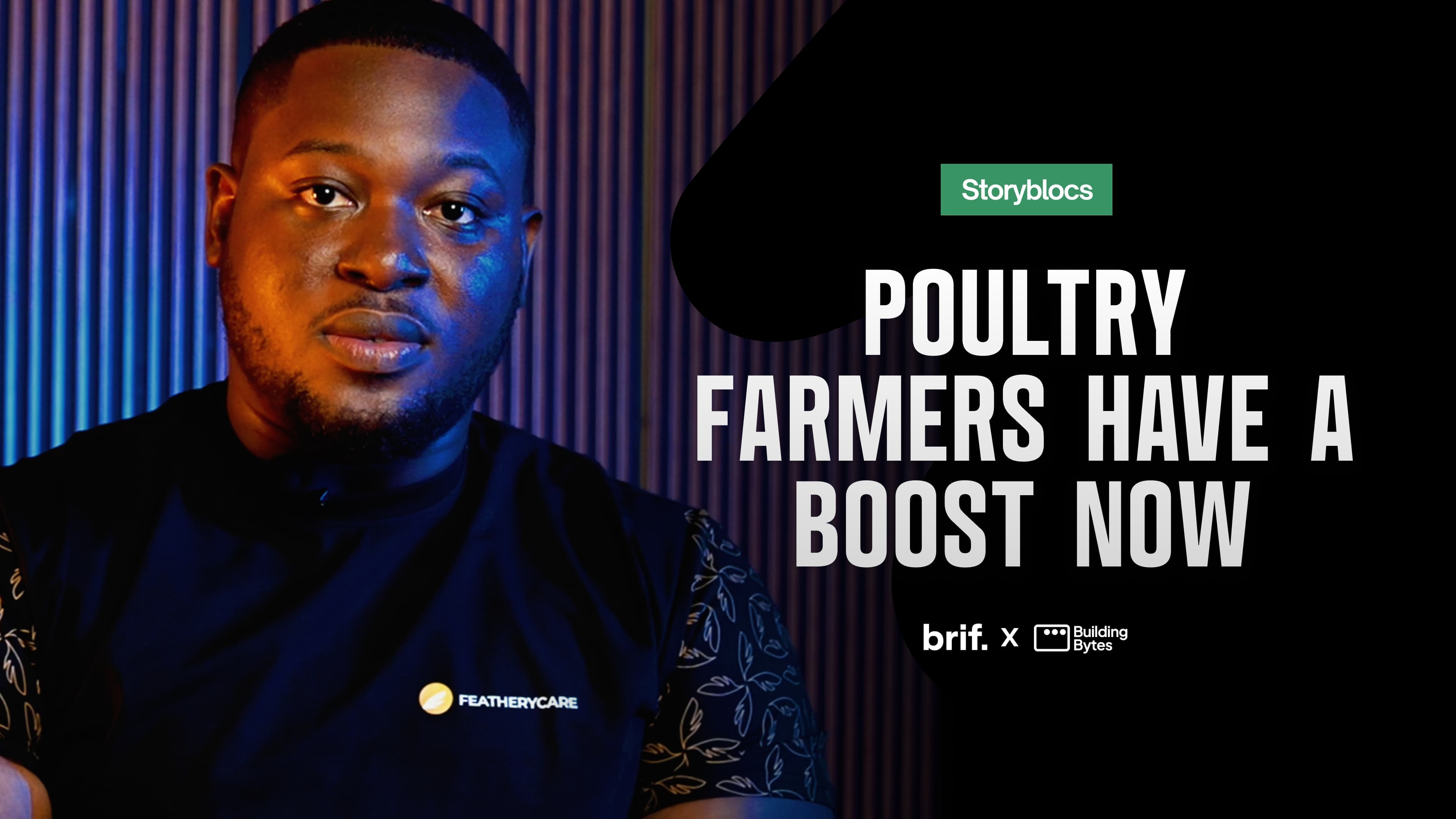
The standard explanation points to feed costs, cheap subsidised imports, and policy failure. All of that is real. But Elpidio Tossou, co-founder of Featherycare AI, is looking at a different variable, and it may be the one that actually moves the needle.
The insight.
The poultry farms that thrive in Europe and the Americas are not staffed by better farmers. They have better instruments.
Real-time flock monitoring. Mortality pattern analysis. Disease early-warning systems. Feed conversion data tracked at the batch level. The African farmer making the same decisions- when to vaccinate, when mortality trends signal an outbreak, how to adjust rations- is doing it on instinct and experience alone. By the time something goes wrong, the losses are already counted.
Featherycare AI's position is blunt: the productivity gap is substantially an information asymmetry. Fix the data layer, and you change the economics of local production.
Their platform, Cluck Intelligence, is built around that thesis. Cluck Mobile handles farm data management. CluckChat delivers AI-powered advisory through WhatsApp and Telegram, in local and international languages, connected directly to the farm's own data. CluckWeb turns those records into actionable analytics. CluckLens uses computer vision to monitor the flock in real time.
The WhatsApp interface is the most important design decision in the stack. It doesn't ask the farmer to change their behaviour before seeing value. It meets them where they already are.
The reality.
The platform currently serves over 400 users globally. CluckLens has logged over 7,000 hours of farm data. CluckLink has helped move over 1,000 crates of eggs to market. Cluck Mobile has passed 500 downloads.
These are proof points, not scale. And the gap they're working against is enormous. Ghana's government pledged in 2025 to replace at least 25% of frozen chicken imports through local production, a target that would require raising roughly 67 million broiler birds per year. Getting there demands farms that operate with precision, not guesswork.
The harder constraint is deployment. CluckLens requires cameras on the farm. That means hardware, installation, and a power supply, all real costs in an environment where many farmers are already operating on thin margins. Feed costs alone constitute 60 to 70 percent of total production expenses. A platform that reduces mortality can pay for itself quickly, but the farmer has to believe that before they see it.
The interpretation.
What Featherycare is really building is a data moat, and that moat compounds.
Every hour of CluckLens footage makes the computer vision models more accurate. Every farm record entered into Cluck Mobile makes the AI advisory smarter. The platform that gets to sufficient scale first will have training data that no competitor can replicate quickly. In agritech, as in fintech, the infrastructure advantage is durable once it's established.
Featherycare has mapped this work explicitly to SDG 2, Zero Hunger, and completed Google's Startups for Sustainable Development Impact Measurement Programme. That framing is not just optics. It is how the company accesses the institutional capital and partnership networks that will determine whether it gets to the scale where its data advantage actually compounds.
The 80% import figure is regularly cited in policy discussions as a crisis. Featherycare is treating it as a market.
The decision.
For the poultry farmer: the cost of one preventable disease outbreak almost always exceeds the cost of the monitoring system that would have caught it early. The question isn't whether you can afford this. It's whether you can afford to keep farming without it.
For the ecosystem: the companies that will reshape African food production are not the ones replacing the farmer, they're the ones making the farmer more capable than any single competitor importing frozen protein from six thousand kilometres away can anticipate.
Ghana's chicken problem is not unsolvable. It is, for the first time, becoming measurable.
Featherycare AI is based in Accra. Learn more at featherycare.com.

-9095fb11-cca2-4773-ae61-6c61d8119beb.png&w=3840&q=75)