"Founders across Africa have a big challenge when they try and reach out to investors," says Diane Akuffo, founder of Fundvestor. "It takes months and months, sometimes years, chasing investors all the time, and they don't even know if the investors they're chasing are genuinely interested in what they're doing."
That sentence describes the default state of fundraising for most African founders: a cold-outreach grind with no signal attached to it. Send the deck. Wait. Follow up. Wait again. Never quite learn whether the silence means "not now" or "not ever," or whether the investor read past the first slide at all. Fundvestor is built on the bet that this isn't a capital problem in disguise. It's an information problem, and it's solvable.
The Chase Is the Cost.
Talk to enough founders and a pattern shows up: the fundraising process itself, not the eventual "no," is what drains them. Months turn into years. Energy that should go into the business goes into cold emails and LinkedIn messages to investors who may not fund the sector, the stage, or the geography at all. There's no feedback loop, so founders can't tell if they're being rejected on the merits or simply never seen. That uncertainty is expensive in a way that's hard to put on a balance sheet, and it compounds. A founder who spends a year chasing the wrong twenty investors has a year less runway, a year less product iteration, and a year more of not knowing what to fix.
What Fundvestor Actually Does.
Fundvestor frames itself as a connection platform, but the product sits upstream of the introduction. Two things happen before a founder ever gets matched.
Investor readiness. The platform works with founders on the materials an investor actually evaluates: pitch deck review, business plans, financial projections, and, in Akuffo's words, "anything at all that you need to talk to the investor." The premise is that a large share of founder-investor mismatches aren't about the idea, they're about a founder walking into a conversation with the wrong artifacts, or none at all.
Genuine matching. The second half is filtering for real intent on both sides, so a founder isn't just being pointed at any investor with capital, but at investors who are actually interested in what they're building, and a founder who's actually ready to be in that room.
Put together, it's less "here's a list of investors, good luck" and more an attempt to fix the signal problem at both ends before the introduction happens.
The Traction: $150 Million, and Counting.
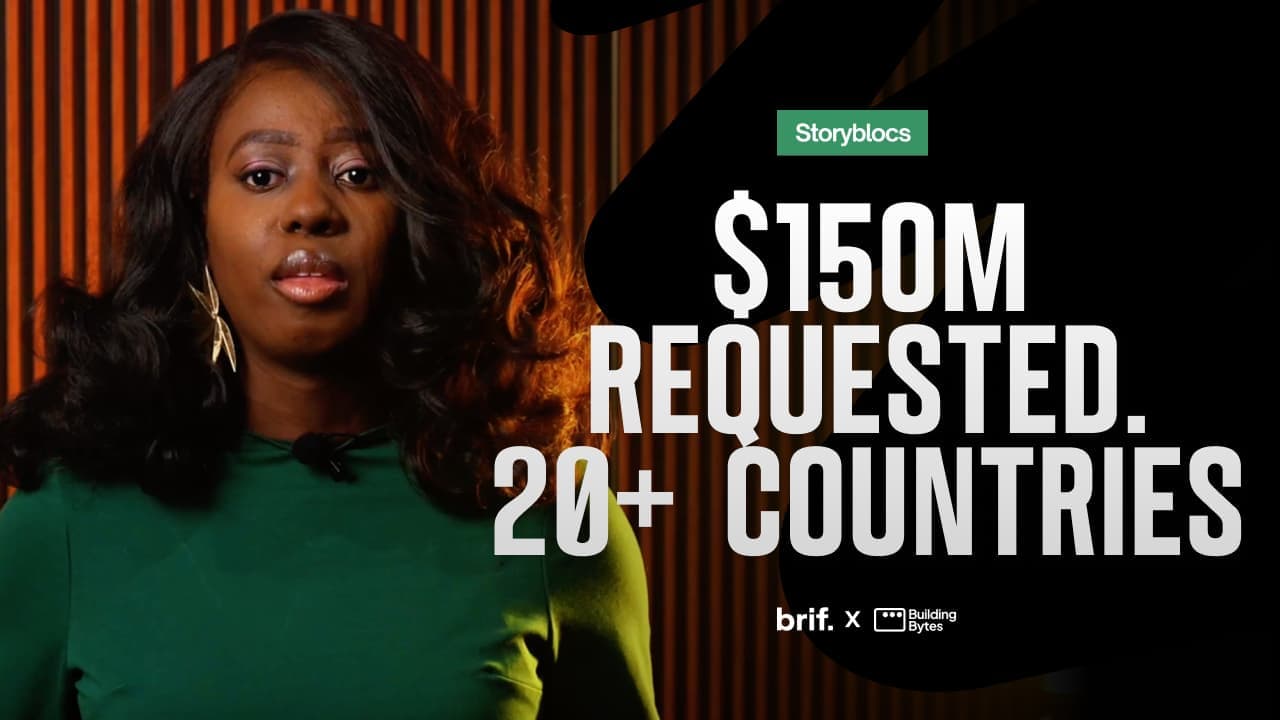
Inside Fundvestor, founders across more than 20 countries have collectively requested $150 million in funding, according to Akuffo. That figure is demand, not capital deployed, but as an early read on where the pain is sharpest, it's a wide one. It suggests the chase Akuffo describes isn't a Ghana problem or a Nigeria problem. It's continental.
Akuffo isn't new to the fundraising side of this equation. She's a business strategist and fundraising specialist who has helped businesses raise over $1.5 million, the founder of Partnered Advisory, a consultancy focused on business strategy and market entry, and a Young African Leaders Initiative (YALI) alumna under the MasterCard initiative. That background shows up directly in the product: Fundvestor isn't a directory built by someone who's never sat on the founder's side of a pitch meeting. It's readiness infrastructure built by someone who has spent years figuring out what makes an investor say yes.
Why Readiness Comes Before Reach.
The obvious way to solve "founders can't find investors" is to build a bigger, better-organized list, more investors, more filters, more searchable fields. Fundvestor's bet is that the list was never the constraint. Access to investor names is not hard to come by in 2026; a well-connected founder can assemble one in an afternoon. What's hard is knowing which of those names will actually say yes, and having something in hand that survives the conversation once you get it.
That reframes the problem usefully. If readiness is the binding constraint, then every platform that just adds more investor contacts to the pile is making the chase longer, not shorter, founders spend more time reaching out to people who were never going to convert. Fixing the materials and the matching first, before the introduction, is a bet that quality of connection beats volume of connection every time.
What to Take From This.
If you're a founder currently in the chase: the instinct is to widen the net, more investors, more messages, more decks sent out. Fundvestor's thesis suggests the higher-leverage move is narrower and slower, get the pitch deck, the business plan, and the financial projections into shape first, so that whichever investor you do reach is actually equipped to say yes.
If you're an investor: a platform that filters for readiness before it filters for fit is, in effect, doing a first pass of due diligence for you. Worth watching whether that changes deal flow quality, not just deal flow volume.
And if you're thinking about the ecosystem as a whole, Akuffo's closing point is the wider claim underneath the product: "The future of Africa truly relies on us, and we need to start investing in ourselves if we want to see any change." Fundvestor is a bet that the $150 million already sitting inside the platform, requested by founders across 20-plus countries, isn't evidence that African founders can't raise. It's evidence of exactly how much demand has been going unmatched.