
The founder of One2One learned to code the way a lot of people learn to code in public: on Twitter, arguing and absorbing in a community of strangers who happened to be building things. When he wanted more structure than a timeline could give him, he turned to Udemy, and got exactly that, courses, sequence, a syllabus. What he didn't get was anyone to talk to. Twitter had the crowd without the curriculum. Udemy had the curriculum without the crowd. Nobody had built the thing in between.
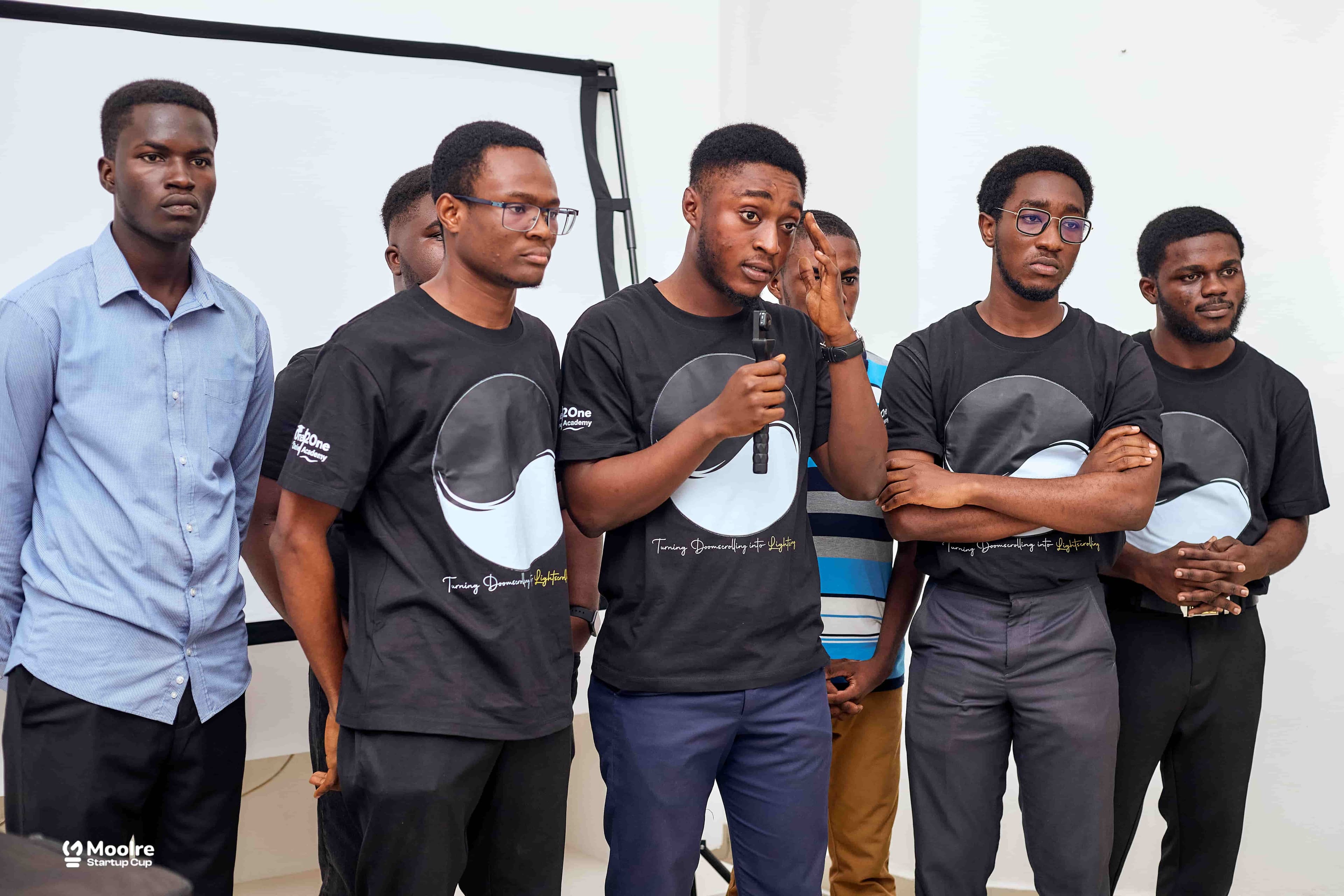
That gap became One2One, a social learning platform now heading into the live pitch stage of the 2026 Moolre Startup Cup as one of eleven finalists.
A Feed Built for Attention, Repurposed for Learning
Ghanaian secondary school students already spend hours a day scrolling. What the founder noticed wasn't a lack of appetite for content, it was a lack of the right content in that same feed. Before One2One, students pieced their preparation together from school lessons, Zoom or WhatsApp tuition groups, textbooks, past questions, private tutors, and whatever educational creators surfaced on YouTube, TikTok, or Instagram, most of it unmoored from the WASSCE syllabus entirely. Some students already followed former National Science and Maths Quiz contestants online, but that content lived nowhere in particular, scattered, hard to organize into anything resembling a course, and not always affordable.
The pattern, in the founder's read, is that every existing tool solves half the problem. Social platforms are built for attention, not curriculum alignment. Course platforms bring structure but strip out community. Students have been left stitching the two together themselves, one disconnected app at a time.
What One2One Actually Does
A student opens the app to a personalized Softbooks feed: short lessons, quizzes, and posts from peers, tutors, and former NSMQ contestants. The team built the product around what it calls a 65/35 model: of every 100 minutes a student spends learning, roughly 65 go to bite-sized Softbook content for daily consistency, and 35 go to full courses for deeper revision. Students can browse friends' learning portfolios to discover what peers are studying, a mechanic the founder compares directly to finding a new playlist through a friend on Spotify, and lean on an AI tool called LAMLA that explains concepts using a student's own course materials. A built-in Mobile Money wallet lets students, or their parents, pay for courses without ever leaving the app.
The harder problem sat underneath the feed itself: deciding what any individual student should actually see, with a limited pool of content to draw from. The team had to rank Softbooks against a student's goals, subjects, weak spots, enrolled courses, and followed creators, without the feed feeling thin or repetitive. The first version leaned on a fairly ordinary social-feed approach, recent posts, basic filtering, before the team rebuilt it into something more deliberately personal.
The Moolre Layer
One2One's Moolre integration is one of the more layered in this year's field. Every student gets a permanent wallet number through Moolre's Payment ID system, which a parent can top up by dialing 203{Payment ID}#, no app, no account of their own required. Collections handles course checkout through Moolre's payment prompt and payment links whenever a wallet balance falls short. Webhooks act as the system of record for deposits and successful payments, crediting balances and unlocking paid content. Name validation confirms a tutor's Mobile Money details before any payout goes out, and Disbursements sends tutors their earnings directly. SMS and WhatsApp cover OTPs and payment notifications.
The resulting payment model is wallet-first: spend the in-app balance, fall back to direct Mobile Money, deduct the platform fee, then disburse the tutor's share. The engineering discipline that took the most work wasn't the API calls themselves but the state management wrapped around them, making sure webhook retries could never credit a wallet twice, and that only the server, never a user's device, could touch wallet balances or unlock a course.
The Community That Came First
The most surprising thing the team has learned since launch is how much pull former NSMQ contestants carry with students. Having watched them compete on national television, students already trust their knowledge, and that trust transfers to the lessons and posts those creators put into the feed. It's turned out to matter, the founder says, as much as the content itself.
That community existed before the product did. One2One began in early 2025 as Zoom-based lessons for Ghana's SHS community, leaning on the drawing power of the NSMQ, and spent close to a year building that audience before the Softbooks feed and course platform officially launched. The moment the founder came closest to giving up was earlier than that, when the idea existed but he couldn't find developers willing to build it with him. What kept him going was watching the community keep growing anyway, with nothing yet to show for it, proof the demand was real before there was a product to prove it.
What's Next
The founder pushes back on a common assumption about building in Ghana right now: that a startup needs funding, a full team, and a finished product secured before it can start. His own account argues the opposite: resourcefulness first, proof that people want the thing second, funding and team third. He's betting the next wave of growth in African edtech comes from platforms that combine social learning, AI, and locally relevant content in ways a traditional classroom can't reach. For One2One, that means continuing to build out the wallet system and the network of peer and NSMQ-alumni creators that has become the product's clearest point of difference.
One2One pitches live in the final stage of the Moolre Startup Cup, with winners announced at the Grand Finale on August 29, 2026.